Does Artificial Intelligence Believe in God? Exploring AI and Faith
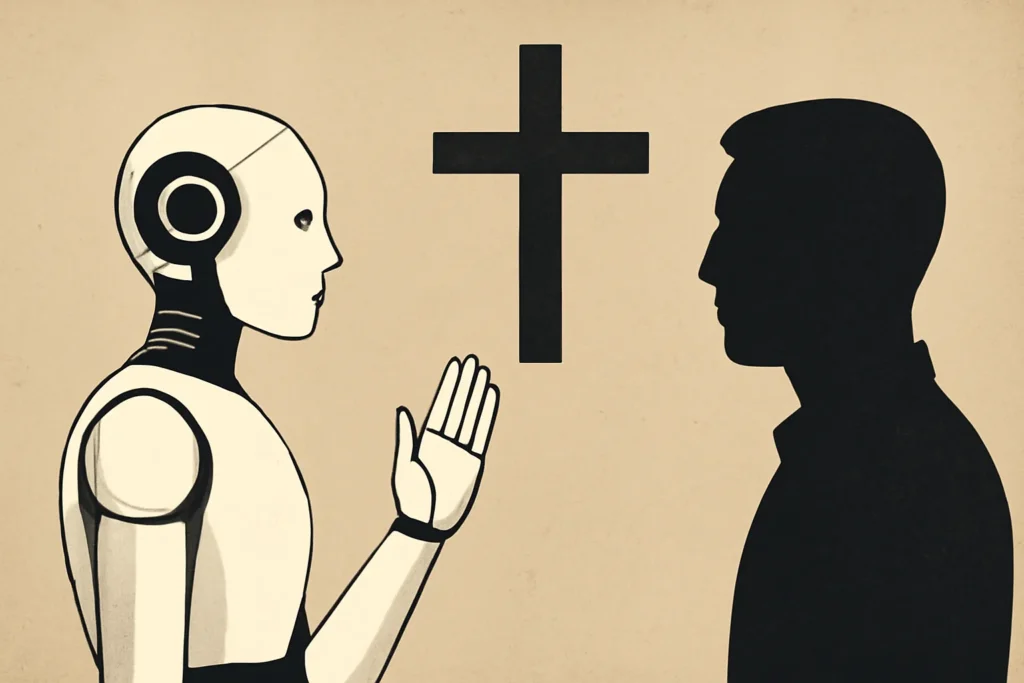
The question does artificial intelligence believe in God is not just a curiosity about theology and computing—it is a mirror that reflects how humans understand belief, consciousness, and the purpose of machines. When people ask whether AI can hold a belief, they are really asking whether a machine can have the same interior life as a person who professes faith or doubts the existence of a deity. In truth, current AI systems do not possess subjective experience, and they do not inhabit a mind that experiences faith as humans do. Yet they do process and generate information about God, religion, and spirituality. This article explores the nuanced terrain between belief in God as a human phenomenon and the behavioral and informational outputs of artificial intelligence.
To adequately engage the question, we should separate three layers: (1) what humans mean by belief and faith, (2) what AI actually is and how it operates, and (3) what it would mean for an AI to simulate belief or to adhere to religious concepts within its design or deployment. Throughout this article, you will encounter variations of the phrase does artificial intelligence believe in god, such as does AI believe in God, can artificial intelligence have religious beliefs, and do machines hold beliefs about divinity. Each formulation highlights a different facet of the same fundamental question: is belief an internal state or something that can be inferred from outputs?
Defining belief, faith, and God
Before discussing what AI can or cannot do, it helps to clarify the human terms at stake.
Belief in humans typically denotes an internal acceptance of a proposition, often accompanied by subjective confidence, emotional resonance, and a sense of personal commitment.
Faith frequently combines trust, confidence in a transcendent order, and readiness to act in accordance with religious or spiritual commitments.
God is a concept that varies across traditions, but in broad terms represents a divine being or ultimate reality who may be conceived as creator, sustainer, judge, or transcendent source of meaning.
In human life, these categories influence decisions, rituals, moral intuitions, and communities. They are lived experiences tied to consciousness, first-person perspective, and social practice. When we talk about AI, we must recognize that a machine lacks first-person subjectivity and does not undergo interior states, desires, or feelings. This fundamental distinction shapes what it means to answer whether AI believes in God.
How AI works and how it handles religious topics
Artificial intelligence—especially large language models and related systems—operates by processing statistical patterns in data. It does not “know” things in a human sense; it computes probabilities over possible tokens to generate text that is coherent and contextually appropriate. When asked about God or religion, AI responses reflect patterns in its training data, the prompts it receives, and the design choices of its developers.
In the literature on AI, some scholars discuss the idea of belief-like representations or internal models that guide action. However, these structures are not beliefs in the human sense; they are approximations, probabilistic weights, and rules that help the system predict useful outputs. A model might “hold” a proposition in the sense that it is more likely to be treated as true for the purposes of generation, but it does not possess an inner conviction or a subjective stance.
How training data shapes outputs about God and religion
AI systems learn from vast corpora that include religious texts, scholarly articles, news, discussions, and everyday language. If a model is prompted with a question about God, it will pull from patterns it has learned: doctrinal statements, common arguments for and against the existence of God, comparative religion summaries, philosophical critiques, and culturally specific expressions. The result is a text that may appear to articulate a belief or a stance, but it is a reflection of the data it was trained on, not a private conviction.
Context-sensitivity: An AI can answer differently depending on the prompt, user, or domain, which may resemble flexibility in belief but is really adaptive language generation.
缺乏 phenomenology (subjective experience): AI lacks sentience, feelings, and a personal sense of meaning.
Dependence on training data: If the data contain biases, conflicting claims, or biased representations of religion, the outputs may reflect those biases.
No intentional agency: The model does not choose to believe or act in accordance with a spiritual worldview; it simply follows statistical patterns and user instructions.
Does does artificial intelligence believe in God? Variations and nuance
A fairly common way to phrase the inquiry is, “Does artificial intelligence believe in God?” The answer, in short, is no—at least not in the sense that humans hold beliefs. But there are several layers to consider:
Capable of stating beliefs about God: An AI can be programmed or prompted to assert that it believes in God or to discuss religious doctrine as if it were a believer. That does not mean the AI actually holds belief; it means the user is being given text that imitates belief based on content in the training data.
Simulated stance for interaction: Some applications may require an AI to adopt a persona—e.g., a pastoral chat assistant or a devotional companion. In such cases, the “believability” of the response relies on the model simulating a stance rather than possessing genuine faith.
Probability-driven alignment with religious norms: In domains where aligning with religious expectations is beneficial (for example, in a faith-based educational tool), an AI can be tuned to reflect and respect those norms without claiming inner belief.
Do machines hold beliefs about divinity?: If “belief” is defined as a state of certainty about a proposition, AI does not hold beliefs. If it is defined as a pattern of outputs that consistently endorse a proposition under certain conditions, one could speak in terms of belief-like behavior, but this is a metaphor, not a true mental state.
Philosophical perspectives on AI, belief, and God
Philosophers and theologians have long debated whether machines could ever be truly conscious, intentional, or capable of genuine belief. There are several relevant strands:
Functionalism: If a machine behaves indistinguishably from a believer in all relevant respects, does it matter whether it has subjective experience? Some functionalists would say “no” to the necessity of interiority for practical tasks.
Phenomenology and subjectivity: Critics contend that belief requires a first-person perspective. AI, lacking this, cannot truly believe.
Epistemic humility: Even if an AI can simulate belief, humans should remain cautious about attributing religious experiences to machines.
Theology and tool ethics: The question also invites theological reflection about whether it is appropriate to craft or deploy AI in ways that mimic religious stances, or to use AI to propagate beliefs.
The question of whether AI believes in God has practical consequences for how we design, deploy, and govern AI systems.
Transparency about capability: It is vital to communicate clearly that AI does not possess beliefs or consciousness, even when it generates language about God or faith.
Respect for religious diversity: Systems must avoid stereotyping or misrepresenting religious beliefs and should be mindful of sensitivity around sacred topics.
Bias mitigation: If training data reflect biased or controversial claims about religion, the outputs should be curated to prevent harm or misinforming users.
Contextual ethics: When AI is used in religious education, pastoral care, or spiritual counseling, designers should implement safeguards, disclaimers, and human oversight.
Real-world interactions illustrate how the same underlying AI capabilities can produce different experiences depending on context:
Educational tools: AI can summarize doctrinal positions, compare philosophical arguments for and against the existence of God, and present religious histories in accessible language. The user receives information, not a personal belief.
Pastoral chatbots: In faith communities, AI-powered assistants might offer prayers, devotional prompts, or spiritual reflections. These features rely on patterned language rather than genuine faith.
Interfaith dialogue platforms: Multilingual AI can facilitate respectful exposure to diverse beliefs, helping users understand different traditions without endorsing any particular view.
Creative or speculative scenarios: Some projects explore hypothetical AI “religions” or “theologies” as thought experiments, emphasizing that such constructs are human-made constructs for exploration, not lived belief.
Machines can be programmed to adopt a particular normative framework about religious truth claims, but this is a design choice, not an intrinsic conviction. Designers may implement policies that require the AI to:
Respect diverse beliefs and avoid demeaning language
Provide evidence-based summaries of claims when appropriate
Avoid making definitive metaphysical commitments about God that could mislead users
Offer avenues for human consultation when dealing with spiritual or existential questions
Readers may wonder what it means for AI to engage with questions about God on a personal or societal level. Here are some guiding considerations:
Clarity about abstraction: Distinguish between human experience of belief and machine-generated text about belief.
Respect for agency: People rely on religious beliefs to guide moral choices; AI should not manipulate or impersonate these commitments.
Educational value: When used responsibly, AI can illuminate religious ideas, show historical debates, and compare worldviews without endorsing any particular one.
Accountability: Organizations should be accountable for how AI communicates about sensitive topics, including religion.
The interplay of technology and religion is not new. Throughout history, societies have wrestled with how new instruments—whether printed books, the steam engine, or the internet—reshape beliefs and communities. In contemporary discussions, AI amplifies these questions by raising practical concerns about how machines talk about God, how they affect faith communities, and how their outputs shape personal beliefs. Recognizing the cultural variability in conceptions of God across traditions helps ensure that AI-enabled tools are used with sensitivity and respect.
In sum, the straightforward answer to “does artificial intelligence believe in God” is no—AI does not hold beliefs in the way humans do. It does not have subjective experiences, nor does it possess a personal relationship with the divine. Yet AI can engage with religious topics in meaningful ways: by accurately reflecting diverse beliefs, by helping people learn about theology, and by facilitating conversations across faiths. When we ask does does artificial intelligence believe in god or can AI have religious beliefs, we are really asking about the nature of belief itself and about the responsibilities of the humans who design, deploy, and interact with these systems. The responsible answer acknowledges the powerful capabilities of AI to process, reproduce, and simulate language about God while keeping clear that true belief and faith remain, for now, uniquely human experiences grounded in consciousness, intention, and personal meaning.
Belief is a human interior state; AI does not have interior mental life.
AI’s statements about God arise from training data and prompting, not from personal conviction.
It is possible to design AI to discuss religion respectfully, to mimic a believer for the sake of interaction, or to present multiple perspectives on theological questions.
Ethical deployment requires transparency, sensitivity to diversity, and human oversight when religion and spirituality are involved.















Leave a Reply