Moral theology: How faith shapes ethical decisions
Moral theology: How faith shapes ethical decisions
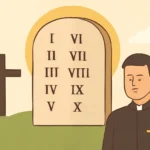
Moral theology asks how human beings should live in response to God, truth, and the good of other people. It is more than a list of religious rules: it is a disciplined way of reasoning about right action, character, responsibility, and human flourishing.
People turn to moral theology when facing questions about honesty, forgiveness, sexuality, money, work, suffering, violence, technology, or care for creation. The subject seeks answers that respect both moral truth and the concrete circumstances in which choices are made.
Moral theology is the study of human conduct in light of a religious understanding of reality. In Christian traditions, it considers how people are called to love God and neighbor, become holy, resist evil, and participate in the good of the world.
The word moral concerns the quality of human actions and the kind of person someone is becoming. The word theology signals that these questions are considered in relation to God, creation, redemption, grace, and the purpose of human life. A decision can therefore be evaluated not only by its immediate result, but also by its effect on relationships, character, justice, and communion with God.
Moral theology usually considers several connected questions:
What is the good? This concerns the purposes and values that make human life worthy and complete.
What should I do? This asks whether a particular action respects moral duties and human dignity.
What kind of person am I becoming? This focuses on habits, virtues, vices, motives, and spiritual growth.
What responsibility do I have? This examines freedom, knowledge, social conditions, power, and the effects of an action on others.
How can I change? This brings in repentance, forgiveness, grace, practical wisdom, and moral formation.
The discipline differs from a purely secular ethics course because it treats moral life as connected to a relationship with God. It also differs from a narrow rulebook because Christian morality includes love, mercy, intention, conscience, and the transformation of the whole person.
Central idea: Moral theology evaluates both what you do and who you are becoming through repeated choices, relationships, desires, and responsibilities.
Christian communities do not express moral theology in exactly the same way. Catholic, Orthodox, Anglican, Lutheran, Reformed, evangelical, and other traditions may emphasize different authorities or methods. Some give greater weight to natural law and the teaching office of the church; others emphasize biblical interpretation, covenant, vocation, or the believer’s direct responsibility before God.
Even with these differences, many Christian approaches share a concern for human dignity, love of neighbor, truthfulness, justice, mercy, faithfulness, and accountability. Moral theology is therefore both a field of study and a practical discipline for living faithfully.
How Scripture, tradition, reason, and conscience work together
Christian moral reasoning begins with Scripture, but it does not treat biblical reading as a simple process of finding one sentence for every modern situation. Scripture presents creation, covenant, wisdom, commandments, the teachings of Jesus, the example of his life, and the moral vision of the early Christian communities.
The Hebrew Bible emphasizes themes such as faithfulness to God, protection of the vulnerable, truthful worship, justice, and covenant responsibility. The prophets repeatedly criticize religious practice that ignores poverty, exploitation, violence, or dishonest judgment. Wisdom literature reflects on prudence, speech, friendship, wealth, suffering, and the formation of character.
The New Testament places love of God and neighbor at the center of Christian life. Jesus’ teaching in Matthew 5–7 connects outward behavior with the condition of the heart, while the parable of the Good Samaritan in Luke 10 presents mercy across social and religious boundaries. Paul’s discussion of the fruit of the Spirit in Galatians 5 describes a pattern of life marked by love, patience, self-control, and other virtues.
These passages do not eliminate the need for judgment. They provide a moral vision that must be applied carefully, with attention to genre, context, the whole of Scripture, and the difference between enduring principles and ancient social arrangements. A responsible interpretation avoids using isolated verses to justify cruelty, prejudice, or indifference.
Tradition preserves the accumulated reflection of a faith community. It includes the teaching of influential theologians, the witness of saints, patterns of worship, official statements, pastoral practice, and debates across generations. Tradition can help believers recognize interpretations that have been tested over time, while also requiring honest examination when inherited practices have caused harm or excluded people unjustly.
Reason helps people identify facts, clarify concepts, evaluate consequences, and recognize contradictions. Moral theology does not ask people to stop thinking. It asks them to use intelligence in service of truth, while acknowledging that reason can be distorted by fear, selfishness, group pressure, or a desire for control.
Conscience is a person’s practical judgment about what should be done in a particular situation. It is not simply a private preference or a feeling of comfort. A mature conscience seeks truth, considers relevant responsibilities, remains open to correction, and accepts accountability for action.
Different Christian traditions describe the relationship among these sources in different ways. A Catholic approach commonly gives a structured role to Scripture, apostolic tradition, the church’s teaching, natural law, and conscience. Many Protestant approaches place special emphasis on Scripture while also drawing on reason, community, historical teaching, and the guidance of the Holy Spirit. In every case, conscience requires formation rather than automatic trust in every strong impulse.
Why conscience needs formation
Conscience can be mistaken. A person may sincerely believe an action is acceptable while being misled by incomplete information, habit, ideology, fear, or social pressure. Sincerity matters, but sincerity alone does not make a judgment correct.
Conscience grows through prayer, study, honest self-examination, wise counsel, moral experience, and attention to people who may be affected. It also develops through humility: you may need to admit that a convenient decision is not the same as a good one.
Learn the relevant facts before making a serious decision.
Ask whether personal bias or self-interest is shaping your judgment.
Consider the dignity and rights of everyone involved, especially those with less power.
Compare the choice with the central demands of love, justice, truth, and faithfulness.
Seek advice from a trustworthy pastor, spiritual director, counselor, or experienced moral teacher when the stakes are high.
How actions, intentions, circumstances, and consequences are judged
Moral theology normally looks at an action through several lenses rather than relying on one question. A common framework examines the object of the act, the person’s intention, and the surrounding circumstances. These elements help explain why two outwardly similar behaviors may carry different levels of responsibility.
The object is what a person freely chooses to do. For example, returning a lost wallet, hiding evidence of wrongdoing, giving truthful testimony, or sharing confidential information are distinct kinds of acts. Describing the action precisely matters because vague language can conceal its moral character.
The intention is the purpose the person hopes to achieve. A person may give money to help someone, to gain influence, or to manipulate public opinion. A good intention can make a good action more generous, but it does not automatically make a harmful action acceptable. Wanting a desirable outcome cannot justify every method used to obtain it.
Circumstances include who is affected, what risks are present, how much power each person has, what alternatives exist, and how serious the consequences may be. Circumstances can increase or reduce a person’s responsibility, but they do not turn every wrong action into a right one.
Consequences still matter. Moral theology pays attention to foreseeable harm, benefits, social effects, and the possibility of repair. It does not usually reduce morality to a calculation of outcomes, however, because some actions violate human dignity or basic trust even when they appear useful in the short term.
Practical warning: “The outcome was good” is not enough to settle a moral question. Examine the action itself, the purpose behind it, the foreseeable effects, and the duties owed to other people.
This framework helps explain why moral responsibility is not identical to the external result. Suppose a driver causes an accident despite careful attention, while another driver intentionally takes a dangerous shortcut and injures someone. The physical harm may be similar, but the second person may bear greater responsibility because of the chosen risk and disregard for others.
Responsibility can also be reduced by factors such as ignorance, coercion, fear, addiction, immaturity, psychological distress, or extreme social pressure. These factors do not necessarily make an action good, but they may affect how blame should be assessed. Moral theology therefore requires both truth and mercy.
The principle often called double effect is used in some Christian moral reasoning when one action has both a good effect and a harmful effect. Its application is careful rather than automatic. In general, the action must not itself be wrongful, the harmful effect must not be the means of producing the good effect, the harmful effect must not be intended, and there must be a proportionately serious reason for permitting the risk.
Because this principle can be misused, it cannot serve as a shortcut for excusing any decision with a positive result. The details of the action, the level of risk, the availability of alternatives, and the protection of vulnerable people all matter.
Virtue, sin, freedom, and the formation of character
Moral theology is concerned with individual acts, but it is equally concerned with habits of the heart. A person who repeatedly tells the truth becomes more disposed toward honesty; a person who repeatedly exploits others may become less sensitive to their dignity. Choices shape character, and character influences later choices.
Virtue is a stable disposition to choose and practice what is good. Classical Christian moral theology often discusses prudence, justice, fortitude, and temperance as cardinal virtues. Faith, hope, and love are traditionally described as theological virtues because they orient the person toward God. Other virtues include patience, humility, generosity, courage, chastity, compassion, and integrity.
Prudence is not mere caution or cleverness. It is the practical ability to recognize what should be done here and now. Justice gives others what they are owed, including respect, honesty, and fair treatment. Fortitude enables a person to remain faithful amid fear or hardship, while temperance orders desires rather than allowing them to control behavior.
Sin refers to freely chosen separation from the good and from right relationship with God and neighbor. It can involve an action, a neglected responsibility, an interior desire, or a pattern embedded in social structures. Christian moral theology therefore addresses both personal wrongdoing and conditions such as exploitation, racism, corruption, abuse, and extreme neglect of the vulnerable.
Not every failure has the same moral weight. A serious evaluation considers the matter, knowledge, freedom, intention, pattern of behavior, and harm caused. The language of sin should never be used casually to label people or to ignore the possibility of ignorance, coercion, trauma, or unequal power.
Freedom is essential to moral responsibility, but Christian theology does not define freedom as doing whatever you want. A person can become less free through addiction, resentment, compulsive behavior, manipulation, or dependence on approval. Moral formation aims at a deeper freedom: the growing ability to choose what is true and good without being ruled by destructive impulses.
Grace is central to Christian moral theology because people do not transform themselves through willpower alone. Grace is understood as God’s active help, healing, and gift of participation in divine life. It does not replace effort or responsibility; it makes repentance, forgiveness, endurance, and genuine change possible.
Repentance involves more than feeling guilty. It includes recognizing wrong, turning away from it, accepting responsibility, repairing damage when possible, and changing the conditions that made the behavior likely. When harm has occurred, forgiveness does not erase the victim’s need for safety or remove legitimate consequences.
How moral theology addresses modern and everyday dilemmas
Moral theology becomes practical when a person must decide how to act amid competing responsibilities. A useful process begins with facts rather than assumptions and ends with a willingness to accept accountability.
Describe the decision accurately. State what you are actually considering, avoiding euphemisms that hide the action.
Gather reliable facts. Identify who is affected, what risks exist, and what information remains uncertain.
Identify the values and duties involved. Consider truthfulness, justice, loyalty, privacy, safety, care, promise-keeping, and respect for human dignity.
Examine your intention. Ask what you hope to achieve and whether fear, pride, resentment, profit, or the desire for approval is influencing you.
Consider realistic alternatives. A moral conflict may become clearer when you look for a third option that protects more people.
Test the decision through prayer, Scripture, reason, and wise counsel. Serious matters deserve more than an immediate emotional reaction.
Act and remain accountable. Be prepared to explain the choice, accept consequences, and repair harm if your judgment proves mistaken.
Consider workplace honesty. A manager may discover that a report contains a serious error shortly before a deadline. Concealing it could protect the team temporarily, while disclosing it may create embarrassment and financial cost. Moral reasoning would examine the duty of truth, the people who may rely on the report, the seriousness of the error, possible corrections, and whether the manager’s motive is protection or self-preservation.
Consider digital privacy. Sharing a private message may expose abuse or protect someone from danger, but it may also violate trust or spread sensitive information unnecessarily. The relevant questions include consent, urgency, the credibility of the threat, the least harmful way to seek help, and whether the disclosure respects the dignity of the person involved.
Consider consumer choices and environmental responsibility. An individual may not be able to control every supply chain or production practice, yet repeated purchasing decisions can reinforce systems that affect workers, communities, animals, and ecosystems. Moral responsibility may involve learning what is reasonably knowable, avoiding waste, supporting fairer practices when possible, and advocating for institutional change.
Public issues require the same care. Questions about poverty, immigration, health care, war, criminal justice, artificial intelligence, and climate responsibility cannot be settled by slogans alone. They involve human rights, social structures, competing goods, technical facts, and the protection of people with limited power.
Christian moral theology often distinguishes between personal morality and social morality without separating them. A person’s private choices can affect families, workplaces, markets, and political communities. Likewise, unjust systems can pressure individuals and limit their available choices.
When moral disagreement persists, respectful dialogue should focus on reasons rather than attacks on a person’s character. Good disagreement allows room for evidence, acknowledges uncertainty, distinguishes serious principles from personal preferences, and avoids treating opponents as less than human.
How to study moral theology responsibly
A strong beginning combines intellectual clarity with self-examination. Read primary religious texts in context, learn how a tradition interprets them, and compare major approaches rather than assuming that one vocabulary represents all Christianity.
Pay attention to the difference between moral principles, prudential judgments, disciplinary rules, and pastoral advice. A principle may require justice, while several practical policies could express that principle. Confusing a particular strategy with the underlying moral commitment can make discussion needlessly rigid.
It also helps to study the history of moral reasoning. Christian thinkers have debated war, wealth, slavery, punishment, sexuality, political authority, medical treatment, and the limits of obedience. Knowing this history encourages humility and shows why careful distinctions matter.
Ask what view of the human person a moral argument assumes.
Look for the people who bear the greatest risks or burdens.
Separate intended effects from merely foreseeable effects.
Check whether a rule is being applied consistently.
Give attention to lived experience without treating experience as the only source of truth.
Allow mercy and accountability to operate together.
Good moral theology should produce neither careless permissiveness nor harsh condemnation. It should make people more attentive to truth, more capable of wise action, more resistant to exploitation, and more willing to seek forgiveness and repair. Its deepest purpose is not simply to win arguments about behavior, but to form people who can love faithfully and act responsibly.
Frequently asked questions
Is moral theology the same as religious ethics?
The terms overlap, but they are not always used identically. Religious ethics often refers broadly to ethical reasoning shaped by religious beliefs. Moral theology usually has a more explicitly theological focus: it asks how human action relates to God, grace, sin, virtue, the church, and the purpose of human life. Different schools and denominations may use the terms with somewhat different boundaries.
Can moral theology change when circumstances change?
The underlying moral principles may remain stable while their application develops as new facts and technologies arise. Questions involving artificial intelligence, genetic medicine, digital privacy, or environmental damage require attention to realities earlier thinkers could not have described directly. Development should clarify and apply moral commitments rather than simply redefine whatever is convenient.
What should someone do when conscience and religious authority seem to conflict?
Take the conflict seriously rather than reacting impulsively. Check the facts, study the teaching carefully, examine personal motives, and seek guidance from a trusted and well-informed religious leader. Conscience should be followed, but it also needs formation and correction. In situations involving abuse, coercion, or immediate danger, personal safety and appropriate professional or legal help should take priority.
Why does moral theology discuss virtues instead of only rules?
Rules can identify boundaries, but virtues shape the person who must make decisions in complex situations. Courage, justice, temperance, prudence, honesty, and compassion help someone recognize what a rule requires and carry it out well. Virtue also addresses repeated behavior, since moral life concerns long-term character rather than isolated choices alone.













Leave a Reply