Thessalonians 4: Meaning, context, and practical lessons
Thessalonians 4: Meaning, context, and practical lessons
1 Thessalonians 4 teaches believers to live holy, loving, responsible lives while waiting with confidence for Jesus Christ’s return. When people refer to “Thessalonians 4,” they usually mean this chapter, since 2 Thessalonians has only three chapters. Paul writes to a young church in Thessalonica, encouraging Christians who are learning how faith in Christ should shape private behavior, relationships, work, grief, and hope.
The chapter moves from everyday discipleship to one of the New Testament’s clearest teachings about the future resurrection of believers. Its subjects may seem different at first, but they are connected by one central idea: Christian hope changes the way you live now. Because God has called his people to holiness and promises life beyond death, believers can practice love, work faithfully, grieve honestly, and wait without panic.
Why 1 Thessalonians 4 was written to a young church
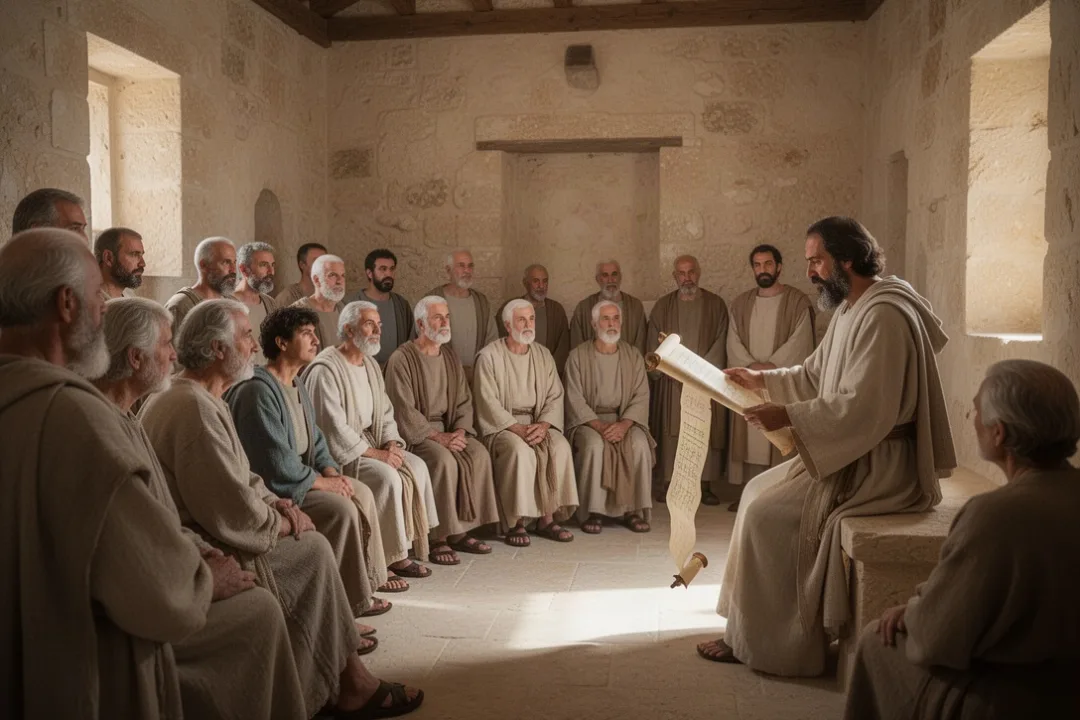
Thessalonica was an important city in Macedonia, a region of northern Greece. Paul, Silas, and Timothy had helped establish the church there, but Paul’s visit was cut short by opposition. The believers continued following Christ under pressure, and Paul later wrote to strengthen them and answer concerns they were facing.
The church had already received instruction about Christian living. Paul does not treat them as people who know nothing; instead, he urges them to continue growing in what they have learned. The tone is both warm and serious. He recognizes their faithfulness while making clear that spiritual maturity means ongoing obedience, not simply a strong beginning.
Some Thessalonians were apparently troubled about believers who had died before Christ’s return. They may have wondered whether deceased Christians would miss the promised resurrection or the Lord’s appearing. Paul addresses that fear directly, giving them grounds for comfort and hope rather than speculation.
Helpful context: 1 Thessalonians 4 is not a collection of unrelated religious sayings. Its call to holiness, its command to love, its instruction to work, and its teaching about resurrection all answer real concerns in a young Christian community.
What 1 Thessalonians 4 says about holiness and sexual integrity
Paul begins by urging the Thessalonians to live in a way that pleases God. He connects God’s will with their sanctification, a word describing the process of being set apart for God and increasingly shaped by his character. Christian obedience is therefore not merely about avoiding punishment; it is about becoming the kind of person God calls you to be.
The first specific concern is sexual behavior. Paul tells the believers to avoid sexual immorality and to exercise self-control in their own bodies. His language presents sexuality as morally significant rather than private conduct with no spiritual consequences. The body, relationships, and treatment of other people all belong within a person’s commitment to God.
The passage also emphasizes that sexual sin can wrong another person. Paul warns against taking advantage of or deceiving a fellow believer in this area. That warning matters because sexual choices often involve trust, promises, vulnerability, and power, not only personal desire.
In the ancient world, Christian sexual ethics stood apart from many surrounding customs. The church’s teaching challenged both casual sexual behavior and the idea that social status excused exploitation. Paul reminds the Thessalonians that God sees these actions and judges wrongdoing, so believers must not treat another person as an object for personal gratification.
Paul’s standard is not satisfied by outward respectability alone. The aim is a life marked by holiness, honor, and self-control. That requires examining motives, boundaries, habits, and the way you use influence in relationships. It also means refusing to excuse harmful conduct simply because it is common, private, or socially accepted.
How this teaching applies to relationships today
Readers should apply this passage with both moral clarity and pastoral wisdom. It calls for faithfulness and consent, rejects coercion and exploitation, and treats other people as those made valuable before God. It should never be used to shame victims or to conceal abuse behind religious language.
For married people, the principle points toward fidelity, respect, honesty, and care for a spouse’s dignity. For single people, it calls for wise boundaries and integrity rather than treating dating relationships as disposable. For churches and leaders, it requires accountability and protection for vulnerable people, especially where authority or spiritual trust is involved.
Ask whether your choices honor the dignity of the other person.
Pay attention to secrecy, manipulation, pressure, or unequal power.
Set boundaries before temptation becomes a crisis.
Seek trustworthy pastoral, professional, or legal help when abuse or coercion is present.
Practice repentance as a real change in conduct, not only an expression of regret.
Why holiness in 1 Thessalonians 4 includes self-control
Paul’s instruction is practical because Christian holiness involves the body and the will. He does not describe believers as helpless victims of every impulse. Instead, he expects them to learn disciplined habits that protect their own integrity and the well-being of others.
Self-control does not mean denying that desire exists. It means refusing to let desire become the highest authority. A person guided by self-control can acknowledge attraction, anger, loneliness, or fear without allowing those feelings to dictate harmful action.
This part of the chapter also shows why Christian morality cannot be reduced to a list of forbidden acts. The deeper question is whether your life reflects love of God and neighbor. A person might avoid obvious misconduct while still using flattery, secrecy, emotional pressure, or financial dependence to control another person.
Healthy obedience therefore includes truthfulness, patience, responsibility, and a willingness to accept limits. When a relationship requires deception to continue, or when one person’s freedom is repeatedly ignored, the relationship needs serious examination. The chapter directs believers toward conduct that is honorable in God’s sight and protective of others.
How 1 Thessalonians 4 connects holiness with brotherly love
After addressing sexual integrity, Paul turns to brotherly love. The Thessalonians already have a reputation for loving fellow Christians throughout Macedonia, yet Paul encourages them to keep growing. Love is not presented as a feeling that automatically reaches maturity; it is a practice that can become broader, wiser, and more consistent.
Christian love includes generosity, patience, hospitality, forgiveness, and concern for people outside your immediate circle. It also requires learning how to help without controlling, correct without humiliating, and give without demanding repayment. The Thessalonians’ example shows that love can be visible in a congregation’s shared life, not merely in private emotion.
Paul’s encouragement contains an important balance. He praises what the church is doing, but he does not suggest that past faithfulness makes further growth unnecessary. A church can be generous in one area and immature in another. Individuals can care deeply for friends while neglecting strangers, difficult neighbors, or people who cannot offer anything in return.
The command to “do this more and more,” paraphrased from the chapter’s message, reflects a pattern of ongoing spiritual growth. Love expands through repeated choices. It becomes more reliable when believers practice it in ordinary situations, especially when kindness is inconvenient or unnoticed.
What “live quietly” means in 1 Thessalonians 4
Paul then gives a compact set of instructions: live quietly, mind your own affairs, and work with your hands. These words are sometimes misunderstood as a command to avoid public responsibility or never speak about injustice. In context, they address the church’s daily conduct and its public reputation, not a blanket ban on leadership or civic involvement.
To live quietly means to pursue a stable, peaceable life rather than constant disorder, conflict, or attention-seeking. “Mind your own affairs” points toward appropriate boundaries and responsible involvement. Paul is not endorsing indifference to suffering; he is warning against intrusive behavior, idleness, and dependence on others when a person is able to contribute.
The reference to working with one’s hands also carries social meaning. Manual labor could be looked down upon in the ancient Mediterranean world, but Paul presents honest work as honorable. Productive labor enables believers to support themselves, contribute to the community, and avoid unnecessary dependence.
The goal is that Christians would live responsibly before outsiders and lack nothing essential. Their witness would be strengthened not by loud claims alone but by dependable daily conduct. Work, financial choices, speech, and relationships all affect how a church is perceived.
Practical lessons about work, boundaries, and responsibility
This passage offers guidance for people whose faith has become disconnected from ordinary responsibilities. It does not say that every person must have paid employment; caregiving, disability, education, unemployment, and retirement all shape a person’s circumstances. Its principle is that believers should contribute faithfully according to their abilities and avoid exploiting the generosity of others.
Keep promises and communicate clearly when circumstances prevent you from meeting them.
Respect other people’s time, privacy, money, and personal boundaries.
Do your work carefully, whether it receives public recognition or not.
Accept legitimate help when you need it, while refusing prideful isolation.
Do not turn spiritual language into an excuse for irresponsibility.
Make room for rest, family care, worship, and service rather than measuring worth only by productivity.
The phrase “live quietly” should not be used to silence someone who needs to report abuse, confront corruption, or seek justice. Biblical peace is not the same as keeping harmful secrets. Responsible quietness means avoiding needless disruption while still telling the truth and protecting people who are at risk.
What 1 Thessalonians 4 teaches about death and resurrection
The final section responds to the Thessalonians’ concern about Christians who had died. Paul does not tell them to stop grieving. Instead, he distinguishes Christian grief from grief that has no hope. Believers still feel loss, but their sorrow is held within confidence that death does not have the final word.
Paul bases this hope on the death and resurrection of Jesus. Because Christ rose, those who belong to him will also be raised. The promise is not that Christians avoid death or feel no pain; it is that death cannot permanently separate them from Christ’s saving future.
Paul describes a sequence involving Christ’s return: the Lord comes, deceased believers are raised, and living believers are gathered with them to meet him. The precise imagery has produced different interpretations among Christians, but the main pastoral message is clear: dead and living believers share the same future with Christ.
The passage directly counters the fear that those who died earlier would be disadvantaged. They are not forgotten or left behind. Paul’s language places them at the center of the promised gathering, assuring the church that God’s care extends beyond the grave.
“Encourage one another with these words” is Paul’s purpose in the passage, expressed here in paraphrase rather than as a translation.
That purpose should guide interpretation. The teaching is meant to produce comfort, courage, and faithful living. It is not given as a timetable for satisfying curiosity or as a tool for frightening people into obedience.
Keep the focus central: The chapter emphasizes Christ’s victory, the resurrection of believers, reunion with God’s people, and lasting hope. Debates about the order of end-time events should not eclipse those core promises.
How Christians interpret the meeting with Christ
The wording about believers being “caught up” to meet the Lord has led to several Christian interpretations. Some connect it with a separate rapture before a period of tribulation. Others understand it as part of Christ’s single public return, when the dead are raised and his people welcome him.
Still others place this passage alongside broader biblical teachings and avoid assigning a detailed schedule. Since the chapter itself does not answer every question about end-time chronology, interpreters should distinguish between what the text states plainly and what a larger theological system infers.
The plain teaching includes several points:
Jesus will return.
Believers who have died will not be forgotten.
The dead in Christ will be raised.
Living and resurrected believers will be gathered to Christ.
Those who belong to Christ will be with him permanently.
The teaching is intended to encourage the church.
These truths can be affirmed by Christians who disagree about the timing of tribulation, the millennium, or other prophetic details. A careful reader should avoid presenting one disputed interpretation as though every Christian tradition reads the passage identically.
Common mistakes when reading Thessalonians 4
Several reading habits can obscure the chapter’s message. Avoiding them helps keep the text connected to its original purpose and its practical application.
Using the chapter only for end-times speculation. The resurrection teaching matters, but it comes after instruction about holiness, love, work, and community life.
Ignoring the original audience. Paul wrote to Christians concerned about deceased believers, not to people looking for a coded calendar of future events.
Turning “live quietly” into passive silence. The phrase encourages responsibility and peace, not complicity with abuse or injustice.
Treating sexual ethics as a weapon for shame. The passage calls for holiness, accountability, and protection of others, not humiliation of victims.
Assuming grief shows weak faith. Paul offers hope to grieving people; he does not demand emotional numbness.
Separating private spirituality from public conduct. The chapter links faith with work, reputation, relationships, and financial responsibility.
Making every detail equally certain. The central promise is clearer than the disputed chronology surrounding Christ’s return.
How to study 1 Thessalonians 4 carefully
Read the chapter more than once, first noticing its movement from present conduct to future hope. Mark repeated ideas such as pleasing God, love, holiness, work, death, hope, and the Lord’s coming. These repeated themes reveal how Paul connects daily life with the Christian future.
Next, compare the chapter with nearby passages. The beginning of 1 Thessalonians explains the church’s faith and suffering, while the following chapter continues the discussion of the Lord’s day and readiness. Other New Testament passages address resurrection and Christ’s return in different settings, so comparison can broaden understanding without forcing every passage into identical wording.
Ask practical questions as you read:
What conduct does Paul say should change because a person belongs to God?
How does love move beyond emotion into concrete responsibility?
What does faithful work look like in my circumstances?
How does resurrection hope affect the way I grieve?
Which parts of the passage are explicit, and which conclusions require interpretation?
It can also help to read the chapter with a trusted community. A mature study group can help you notice cultural assumptions, hear different Christian interpretations, and apply the text without isolating one sentence from the rest. Good study should produce greater faithfulness and greater compassion, not merely stronger arguments.
How Thessalonians 4 shapes Christian hope today
1 Thessalonians 4 presents hope as a force that steadies ordinary life. The promise of resurrection does not encourage believers to withdraw from work, relationships, or responsibility. Instead, it gives those activities a larger setting: present faithfulness matters because God is bringing his people into a future made whole in Christ.
The chapter speaks to several kinds of fear. Someone struggling with temptation is called toward holiness. Someone isolated from community is called toward love. Someone tempted to neglect responsibilities is called toward honest work. Someone grieving a Christian loved one is told that death is not the end of the story.
These applications belong together. Hope is not escape from life; it is confidence that enables faithful life. Christians can face grief without pretending it does not hurt, resist sin without claiming perfection, and serve others without believing their work earns God’s love.
The chapter’s final emphasis is relational: believers will be with the Lord and with one another. That promise gives Christian hope its shape. The future is not merely continued existence or private relief, but restored fellowship under the reign of Jesus Christ.
For that reason, the appropriate response to Thessalonians 4 is neither panic nor passivity. It is a life marked by holiness, expanding love, responsible conduct, honest grief, and confident expectation. The chapter calls readers to live faithfully in the present because God’s future is secure.
Frequently asked questions
Does “Thessalonians 4” mean 1 Thessalonians chapter 4?
Usually, yes. The phrase generally refers to 1 Thessalonians 4 because 2 Thessalonians contains only three chapters. The chapter discusses Christian holiness, love, work, grief, resurrection, and Christ’s return. If someone cites “Thessalonians 4” without naming the book, checking the surrounding context can confirm which passage they intend.
What does 1 Thessalonians 4 say about the rapture?
The chapter describes the Lord’s return, the resurrection of believers who have died, and the gathering of living and resurrected believers to meet Christ. Christians differ on whether this describes a separate rapture event or Christ’s public return. The passage’s central purpose is encouragement, not establishing a detailed end-times timetable.
Does 1 Thessalonians 4 forbid grieving?
No. Paul acknowledges that Christians grieve when someone dies. He contrasts Christian grief with despair that has no hope, because believers trust in Christ’s resurrection and the future resurrection of his people. The chapter allows sorrow while offering confidence that death does not permanently separate believers from Christ.
What does “live quietly” mean in this chapter?
“Live quietly” encourages a peaceable, responsible way of life rather than constant disorder, conflict, intrusion, or dependence on others. It does not require silence about abuse, injustice, or serious wrongdoing. The surrounding instructions connect quiet living with minding appropriate responsibilities, working faithfully, maintaining a good reputation, and treating others responsibly.
















Leave a Reply