Ignatian prayer: A practical guide for daily reflection
Ignatian prayer: A practical guide for daily reflection
You have ten quiet minutes, but your mind keeps replaying a difficult conversation, a pending decision, or tomorrow’s responsibilities. You may be asking, “How can I pray when I cannot settle my thoughts?” Ignatian prayer offers a practical answer: begin with what is actually happening in you, place it before God, and pay attention to the movements that follow.
Ignatian prayer is not one fixed prayer. It is a family of prayer practices shaped by St. Ignatius of Loyola, especially the Spiritual Exercises. These practices often involve Scripture, imagination, gratitude, self-examination, and a direct conversation with God. The aim is not to produce perfect feelings or immediate answers, but to become more attentive to God’s presence and more honest about the choices in front of you.
Ignatian prayer treats your whole life as material for prayer. Your hopes, irritations, memories, relationships, work, physical energy, and decisions can all become places where you notice God’s action. Instead of separating “religious” moments from ordinary experience, Ignatian spirituality asks you to look for God’s presence in real events.
The method is closely connected with discernment, the process of recognizing which desires and choices lead you toward love, freedom, faith, and service. Ignatian prayer does not encourage you to chase every emotional reaction. It helps you observe patterns over time and consider whether a thought or desire is drawing you toward a more generous life or toward fear, isolation, pride, and confusion.
Many people associate Ignatian prayer with the Examen, a brief review of the day. Others know it through imaginative prayer with a Gospel scene, such as picturing yourself among the people who encounter Jesus. Both practices belong to a wider way of praying that values attention, honesty, and personal response.
Core idea: Ignatian prayer is less about finding the perfect words and more about noticing where you are being invited toward deeper love, freedom, courage, and trust.
How St. Ignatius shaped this way of praying
St. Ignatius of Loyola lived from 1491 to 1556. After a serious injury changed the direction of his life, he began reflecting on his desires, consolations, and discouragements. Over time, these reflections contributed to the Spiritual Exercises, a structured set of meditations, prayers, and discernment practices intended to help people order their lives toward God.
The Spiritual Exercises are not simply a collection of written prayers. They are traditionally made over an extended period, often with guidance from a trained spiritual director. The exercises can also inspire shorter daily practices, but a brief personal prayer should not be confused with completing the full retreat experience.
Ignatian spirituality developed within the Catholic tradition, yet many of its prayer habits can be adapted by Christians from different backgrounds. The central pattern remains recognizable: remember what God has done, attend to the present moment, imagine the Gospel, name your desires, and respond honestly.
What you need before beginning Ignatian prayer
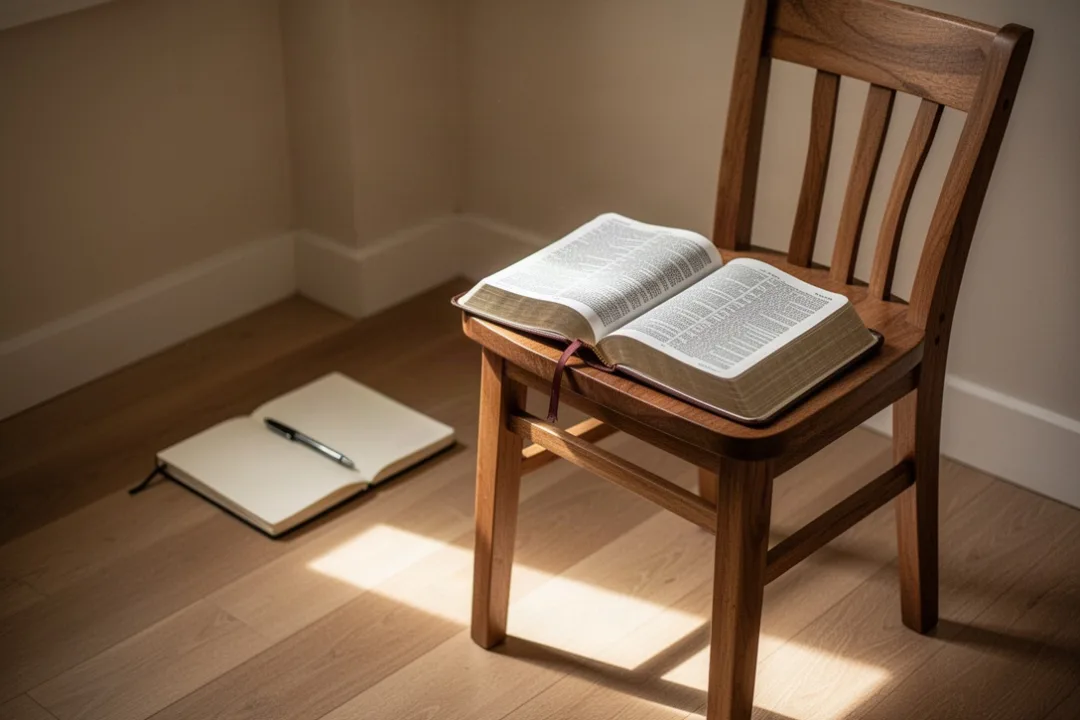
You do not need a special room, a long block of time, or an unusually peaceful mind. A chair, a Bible, and ten to twenty minutes may be enough. Choose a setting where you can be undisturbed, silence notifications, and sit in a posture that helps you remain awake and comfortable.
It also helps to choose a clear purpose. You might want to pray with a Gospel passage, review the day, ask for guidance about a decision, or bring a painful experience to God. A specific intention gives the prayer a direction without forcing a particular outcome.
A quiet place: Choose somewhere you can remain present without constant interruption.
A short passage: Use a Gospel story or another biblical text that you can read slowly.
A simple desire: Ask for what you genuinely want, such as greater trust, compassion, courage, or freedom.
Enough time: Allow a few minutes at the end to notice what stayed with you.
A journal: Write a few words afterward rather than trying to record every thought.
If your mind wanders, that does not mean the prayer has failed. Gently return to the text, your breathing, the person in the Gospel scene, or the feeling you are bringing before God. Attention is practiced gradually; it is not a test you pass at the beginning.
How to pray with a Gospel scene step by step
Imaginative contemplation is one of the best-known Ignatian methods. You use your imagination to enter a Gospel passage, not to invent a new teaching or replace the biblical text. You prayerfully picture the setting, notice the people, listen to what is said, and consider how Jesus is present.
1. Choose a short Gospel passage
Select a story with enough detail to imagine. Examples include Jesus calling the first disciples, healing a person, visiting Martha and Mary, calming a storm, or meeting Zacchaeus. Read the passage slowly once or twice. Do not worry about analyzing every theological point; the purpose is to become present to the scene.
2. Become aware of God’s presence
Begin with a simple act of reverence. You might sit quietly and recognize that you are before God, ask for help, or offer your time. Then name a specific grace you desire. For example, you could ask to know Jesus more personally, to receive compassion for someone, or to become more willing to follow what is good.
Picture the location using details suggested by the passage. Is it a crowded road, a shoreline, a home, a hillside, or a place of suffering? Notice the light, weather, sounds, movement, and distance between the people. You may imagine yourself as one of the bystanders, a participant in the story, or simply someone watching from nearby.
4. Watch and listen without forcing the moment
Let the scene unfold at a natural pace. Notice what attracts your attention. Perhaps you are drawn to the person who is overlooked, the reaction of a disciple, the patience of Jesus, or a single sentence in the passage. Stay with what feels spiritually alive rather than trying to create a dramatic experience.
5. Consider your response to Jesus
Ignatian prayer is relational. After observing the scene, ask what you would say to Jesus and what you imagine Jesus might be showing you. The response may involve gratitude, resistance, grief, relief, or a desire to change. You do not need to manufacture a conversation; honest silence can also be prayer.
6. End with a personal conversation
Ignatius calls this kind of direct conversation a colloquy. Speak plainly to God about what happened during prayer. You may express thanks, ask for help, admit uncertainty, or describe what you do not understand. End with a familiar prayer if that helps you return calmly to ordinary responsibilities.
Read the passage slowly.
Ask for the grace you desire.
Imagine the setting and people.
Notice what draws your attention.
Speak honestly with Jesus.
Record one or two meaningful insights.
How to practice the Ignatian Examen each day
The Examen is a prayerful review of a period of time, usually the day. It is not a scorecard and not an exercise in self-criticism. You look back with God so that you can recognize where you received life, where you turned away from love, and what invitation may be present for tomorrow.
Different versions use different numbers of steps. A simple form can be practiced in ten to fifteen minutes.
Begin by becoming present
Pause and acknowledge God’s presence. Let the day become quieter in your memory. You might take a few steady breaths or sit with your hands open. Ask for the ability to see the day truthfully, with gratitude and mercy rather than defensiveness.
Review the day with gratitude
Recall concrete gifts. These might include a helpful conversation, a meal, a moment of beauty, work completed, physical strength, friendship, laughter, or the ability to begin again after difficulty. Gratitude is not denial of pain. It widens your attention so that hardship is not the only thing you see.
Notice your inner movements
Pay attention to moments of consolation and desolation. In Ignatian language, consolation generally refers to movements toward faith, hope, love, courage, connection, and generous action. Desolation can involve discouragement, isolation, anxiety that narrows your vision, resentment, or a sense of being pulled away from what is good.
These terms do not mean that pleasant feelings are always spiritually reliable or that sadness is always a sign of failure. A difficult conversation may be painful but consoling if it leads toward truth and reconciliation. An attractive opportunity may feel exciting but leave you increasingly self-centered. Look for the deeper direction of the movement.
Name where you missed the mark
Review times when you acted from impatience, fear, vanity, anger, or indifference. Be specific without attacking yourself. Confession, apology, and repair may be appropriate, but shame alone does not create transformation. Ask for mercy and for the freedom to respond differently.
Look toward the next day
Ask what you need for tomorrow. You might need patience in a tense relationship, courage for a difficult task, restraint in a conversation, or the humility to ask for help. End with a small, realistic intention rather than a promise to change everything at once.
Helpful limit: Keep the Examen focused on noticing God’s presence and your response. If reviewing the day consistently triggers overwhelming guilt, anxiety, or compulsive self-monitoring, speak with a trusted pastor, spiritual director, or mental health professional.
How consolation and desolation guide discernment
Ignatian discernment pays attention to the direction of your inner life. The question is not simply, “How do I feel?” but also, “Where is this feeling taking me?” A desire may bring discomfort while leading toward honesty and love. Another desire may feel immediately satisfying while encouraging secrecy, contempt, or withdrawal.
Consolation can look like a growing willingness to forgive, a steadier hope during uncertainty, or a desire to serve without needing recognition. It may also appear as tears, peace, gratitude, or a renewed sense that your life has meaning. Consolation does not always remove difficulty; it can give you strength to face difficulty faithfully.
Desolation may show up as a loss of perspective, harsh self-contempt, compulsive distraction, bitterness, or an impulse to abandon commitments that previously seemed life-giving. Ignatian wisdom recommends caution during desolation. Avoid making major changes solely because you are temporarily discouraged, especially when the decision would isolate you or contradict your deepest values.
Keep a record of significant movements for several days or weeks. Note the situation, your reaction, the direction of the desire, and what followed. Over time, patterns become easier to recognize than isolated moods.
Did the choice make you more honest or more secretive?
Did it increase your capacity to love, serve, and listen?
Did it leave you freer to choose the good, or more controlled by fear?
Did the desire remain steady after prayer and time, or depend on pressure and impulse?
Did wise, trustworthy people see the situation differently from your immediate reaction?
How Ignatian prayer helps with difficult decisions
Ignatian prayer can help you make decisions by clarifying your deepest purpose rather than merely reducing uncertainty. Start by naming the decision honestly. Separate the actual options from imagined alternatives, and identify the values involved. You may need to choose between two good paths, not between an obvious right choice and an obvious wrong one.
Bring each option into prayer separately. Imagine choosing the first path and living with its responsibilities. Notice what happens within you over time. Then do the same with the second. Pay attention to movements of peace, resistance, generosity, fear, attachment, and freedom. This exercise is not a way to predict the future; it helps reveal what you may be clinging to.
Ignatius also recommends examining your motives. Ask whether you want a particular outcome because it serves others and fits your calling, or because it protects your image, comfort, control, or status. Mixed motives are normal. Honest prayer brings them into the light so they can be purified rather than quietly controlling the decision.
For a major choice, seek counsel from people who are wise, trustworthy, and capable of challenging you. Prayer and practical judgment belong together. Consider finances, health, responsibilities, timing, and the effects on other people. Discernment is not a substitute for facts; it helps you use facts with greater freedom.
How to use imagination without becoming distracted
Some people find imaginative prayer natural, while others prefer silence, words, or structured reflection. You do not have to force vivid mental pictures. Imagination can include sensing the atmosphere of a scene, noticing a person’s posture, hearing a phrase, or recognizing an emotional response.
If images become distracting, return to the Gospel text. Read one sentence at a time and pause. You can also choose a simpler practice, such as repeating a short phrase drawn from the passage in your own words. The value of the prayer does not depend on having a powerful experience.
Use imagination in a way that respects the biblical account. You may fill in ordinary details that help you attend, but do not treat an imagined detail as a new revelation or a command from God. Discern the fruit of the prayer afterward: does it lead to humility, love, courage, and truth, or to confusion and self-importance?
How to pray with Scripture without overanalyzing it
Ignatian prayer usually approaches Scripture as a living encounter rather than only as an academic subject. Study has value, but during prayer you may need to set aside the impulse to solve every question. Read enough background to understand the scene, then allow one word, action, or relationship to hold your attention.
For example, while praying with the story of the Good Samaritan in Luke 10:25–37, you might notice the injured person, the religious figures who pass by, the Samaritan’s practical compassion, or your own response to being interrupted. The point is not to reproduce the passage word for word or claim that every imagined detail is historically certain. The point is to let the story question and shape you.
When a passage feels difficult, do not conceal your reaction. Tell God that you feel confused, angry, bored, or resistant. Such honesty can become a doorway to deeper prayer. You may also choose another passage for the day and return to the difficult text later with guidance.
How long an Ignatian prayer session should last
A short practice can be faithful and fruitful. Try ten minutes if you are beginning, fifteen to twenty minutes when you have more experience, or a brief Examen before bed. Consistency usually matters more than length. A five-minute prayer that you can sustain is often more useful than an ambitious plan that creates pressure.
A simple weekly rhythm might include imaginative prayer with a Gospel passage several times, an Examen most evenings, and a longer period for reviewing a decision once a week. Adjust the schedule to your responsibilities. Prayer should deepen your relationship with God, not become another performance standard.
Some days will feel dry. You may feel tired, distracted, or unable to identify anything meaningful. Remain gentle and realistic. A quiet decision to sit before God, even without strong emotion, can itself express faithfulness.
How to record insights after prayer
Write briefly after each session. You might record the passage, the grace you requested, one significant movement, and one possible response. Avoid turning your journal into a transcript of every thought. The purpose is to remember what may need further attention.
Where did I notice gratitude, freedom, resistance, or fear?
What might love ask of me in the next twenty-four hours?
What should I revisit with a trusted spiritual guide?
Read older entries occasionally. Patterns may emerge that were invisible on a single day. You might notice that certain commitments repeatedly bring peace despite difficulty, while particular habits consistently leave you isolated or restless. Treat these patterns as material for prayer, not as automatic answers.
When spiritual direction can strengthen Ignatian prayer
A spiritual director can help you distinguish prayerful discernment from wishful thinking, anxiety, or self-deception. The director does not make decisions for you. Instead, they listen to your experience, ask careful questions, and help you notice how God may be working through your prayer and life.
Guidance is especially useful when you are making a major decision, repeating the same discouraging pattern, carrying unresolved grief, or attempting a retreat based on the Spiritual Exercises. Look for someone with appropriate training, a mature faith, and clear boundaries. A priest, pastor, religious sister or brother, chaplain, or trained lay spiritual director may be able to help.
Prayer should not be used to avoid professional care. If your practice brings severe anxiety, intrusive thoughts, despair, or an inability to function, seek help from a qualified mental health professional as well as appropriate pastoral support. Healthy spiritual discernment makes room for truth, wisdom, and care.
A simple seven-day plan for beginning Ignatian prayer
A short plan can help you learn the method without trying every practice at once. Set aside the same general time each day and keep your expectations modest.
Day one: Spend ten minutes noticing God’s presence and naming one thing for which you are grateful.
Day two: Pray with a short Gospel story and ask for a deeper knowledge of Jesus.
Day three: Review the day, paying attention to moments of connection and isolation.
Day four: Return to the Gospel scene and notice which person or action attracts your attention.
Day five: Bring a current decision before God and examine your motives.
Day six: Practice a longer Examen, including gratitude, honest regret, and hope for tomorrow.
Day seven: Read your notes and identify one recurring invitation or question.
Do not judge the week by how peaceful you felt. Ask instead whether you became more attentive, honest, compassionate, and free. Those qualities often grow quietly before they become noticeable in your emotions or decisions.
How Ignatian prayer changes ordinary attention
The lasting value of Ignatian prayer is often seen in small responses: listening before reacting, recognizing resentment sooner, accepting help, apologizing without excuses, or noticing beauty during a demanding day. Prayer gradually trains you to see your life as a place where God is already present and active.
That attention can shape how you work, rest, use technology, handle conflict, and make commitments. You may begin asking not only what is efficient or impressive, but also what leads toward greater love and freedom. The practice remains grounded in ordinary choices: one conversation, one desire, one response at a time.
Begin with a Gospel passage or tonight’s Examen. Sit honestly before God, notice what arises, and respond with the next faithful step you can see.
Frequently asked questions
Is Ignatian prayer the same as the Examen?
No. The Examen is one Ignatian prayer practice, usually focused on reviewing a period of time with gratitude, honesty, and attention to inner movements. Other Ignatian practices include imaginative contemplation of Gospel scenes, praying through personal desires, spiritual journaling, and structured discernment. The Examen is widely used because it can be completed in a few minutes and adapted to many daily routines.
Can I practice Ignatian prayer without a spiritual director?
Yes, you can begin with a brief Examen or prayer with a Gospel passage on your own. A spiritual director becomes especially helpful for major decisions, extended retreats, persistent discouragement, or work with the full Spiritual Exercises. A director offers perspective and accountability but does not replace your conscience or make choices on your behalf.
What if I do not experience any clear feelings during prayer?
Clear emotions are not required. Ignatian prayer can still be fruitful when it feels quiet, ordinary, or distracted. Record what you noticed, remain patient, and look for patterns over several days rather than demanding an immediate answer. Faithful attention, honest silence, and a small act of love may be meaningful fruits even without emotional intensity.
Can non-Catholics use Ignatian prayer practices?
Many Christians outside the Catholic tradition use adapted Ignatian practices, especially Scripture meditation, the Examen, gratitude, and discernment. The language and supporting guidance can be shaped to fit your tradition. If a practice raises theological or personal concerns, discuss it with a trusted pastor or spiritual leader while preserving its central focus on prayerful attention and response.
















Leave a Reply