Did Moses Write Genesis? Exploring Authorship, Theories, and Evidence
Did Moses Write Genesis? Exploring Authorship, Theories, and Evidence
The question “Did Moses write Genesis?” has echoed through centuries of Jewish, Christian, and scholarly discussion. Traditional religious teaching often affirmed that Mosaic authorship extended to the entire Pentateuch, including Genesis, while modern biblical scholarship tends to describe Genesis as the product of multiple authors, redactors, and a long process of transmission. In this article, we will survey the question Did Moses write Genesis, examine the competing theories, assess the kinds of evidence that scholars cite, and consider what this means for how readers understand the text today. The aim is not only to answer a historical query, but to understand how questions of authorship shape interpretation, theology, and how people engage with sacred literature.
Did Moses Write Genesis? The Traditional Claim and Its Context
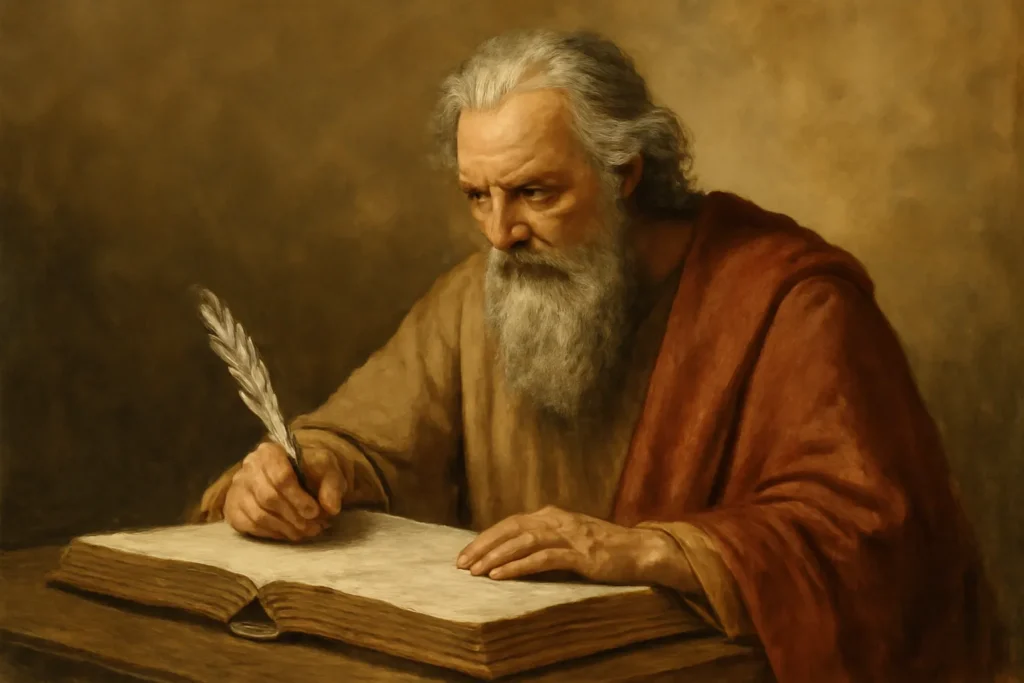
Across centuries, Mosaic authorship has been presented as a coherent explanation for how Genesis came to exist. In the traditional religious view, Moses is presented as the lawgiver and mediator of divine revelation, a figure who stands at the hinge between the stories of the patriarchs and the formal body of the Law. Within this framework, Genesis is part of the same authoritative work that would eventually be known as the Pentateuch (the first five books of the Bible). Proponents of this position often argue that the text’s authority, its self-understanding as God’s revelation, and its placement within the Torah support the approximation that Moses wrote down or compiled Genesis in preparation for leading the people out of Egypt.
Supporters of the traditional stance frequently point to a few kinds of textual signals. First, the Pentateuch is often treated as a single, divinely guided manuscript in ancient religious communities, and early rabbinic and patristic writers repeatedly attribute the whole Pentateuch to Moses or speak as if Moses authored the core material. Second, some readers note a perceived continuity in the narrative voice and in the sense that events in Genesis are framed as something Moses would have recorded or preserved for future generations. Third, there is a long-standing habit in religious communities to treat the entire Pentateuch as authoritative Torah given to Israel through Moses. When people ask, “Was Genesis authored by Moses?” or “Did Moses write Genesis?”, the reflex answer in many faith communities is to tie Genesis to the same author as the rest of the Law.
However, it is important to recognize that even within the traditional view there is variation. Some readers hold that Genesis could have been authored or compiled by Moses in the broad sense (i.e., he initiated and transmitted a compilation that included earlier materials). Others emphasize that the narrative’s final form may reflect later editorial work that Moses could not have performed. In any event, the broad claim often summarized as “Moses wrote Genesis” remains a feature of classical tradition rather than a statement supported by current critical scholarship.
The Documentary Hypothesis and Theories of Authorship
One of the most influential modern frameworks for understanding the origins of Genesis is the Documentary Hypothesis (developed by scholars in the 19th and 20th centuries). This theory posits that the first five books of the Bible are not the product of a single author, but rather the result of several distinct sources that were woven together by redactors over time. The central idea is that the Genesis narrative reflects a combination of strands with different theological emphases, vocabularies, and historical horizons. The term “Did Moses write Genesis?” shifts in meaning under this approach: rather than asking whether a single author named Moses wrote Genesis, scholars ask which sources contributed to Genesis and when redactors shaped the text into the form we have today.
The core tradition most commonly associated with this approach identifies four major strands traditionally labeled as J (the Yahwist), E (the Elohist), P (the Priestly source), and D (the Deuteronomist). Each source is theorized to have its own theological goals, distinctive imagery, and often different places of origin. In Genesis, you can find language, concerns, and stylistic features that scholars attribute to these various streams. The result is a composite work in which the original human authors spoke from different vantage points and were later harmonized by redactors who sought to produce a coherent narrative for the entire Pentateuch.
J, E, P, and D: What are the sources?
The J source is often linked to a southern Israelite tradition with a preference for the divine name Yahweh and a vivid, earthy, anthropomorphic portrayal of God. The E source tends to favor the Elohim term for God in earlier portions and emphasizes prophetic elements and northern Israelite settings. The P source is frequently associated with a more formal, priestly tone, an interest in genealogies, regulations, cultic practice, and cosmology. The D source enters most clearly in Deuteronomy and concerns about covenant loyalty, centralization of worship, and legal reform. In Genesis, traces of these streams appear as stylistic marks, terminology choices, and varying emphases—hence the argument that Genesis is a product of multiple authors and editors rather than a single author living in Moses’ era.
Critics of the simplest form of the theory acknowledge that the exact boundaries between J, E, P, and D are debated. Nevertheless, the basic insight remains influential: Genesis is best understood as a curated collection built from multiple earlier materials, later artfully combined to serve a theological and communal purpose. When readers ask “Was Genesis assembled by Moses or by a later redactor?”, the Documentary Hypothesis suggests a more nuanced answer: Genesis likely reflects a mosaic of earlier traditions that were edited together over time.
Evidence For Mosaic Authorship: Why Some Still Find a Case for Moses
Despite the weight of critical scholarship, several lines of argument are offered by proponents who maintain a version of Mosaic authorship or at least a significant role for Moses in shaping Genesis. These arguments are not definitive proof, but they illuminate why many continue to find traditional claims plausible or compelling within faith communities.
Overall unity of the Pentateuch's framework: Some readers argue that the Pentateuch’s broad theological arc—creation, sin, promise, covenant, blessing—feels purposefully coordinated in a way that could reflect a single, if complex, guiding authority such as Moses.
The shared legal and covenantal language across Genesis and the rest of the Torah is sometimes cited as evidence that a single canonical plan underlies all five books, including Genesis.
Tradition and early testimony: Early Jewish and Christian writers often attributed the entire Torah to Moses, with Genesis included. For communities that take scriptural authority seriously, this traditional witness itself carries weight aside from the documentary details.
The possibility of an eyewitness or early witness voice in the later chapters (e.g., the testimonies of patriarchs and the narrative’s concern with the land of Canaan) is sometimes framed as a sign that the authorial act was a living, ongoing project associated with Moses’ leadership and memory bank.
In these arguments, the claim “Can we still defend Moses as the author of Genesis?” is not a bare assertion but a claim about continuity, authority, and the purposes for which the text was composed and preserved in ancient communities.
Subtle Intra-Genesis Clues
Some proponents point to what they see as internal coherence across Genesis that could suggest a single guiding figure, such as thematic continuities around sin, blessing, and responsibility, which are central to Moses’ broader biblical portrayal. They may also highlight the way genealogies, genealogical transitions, and the repeated formulaic frames resemble ancient Near Eastern storytelling practices that a leader like Moses could have used to shape a coherent narrative.
Evidence Against Mosaic Authorship: The Case for Redaction and Multi-Source Composition
Most contemporary biblical scholars, however, emphasize the weight of evidence against the idea that Moses wrote Genesis in its final form. The following considerations are central in arguing that Genesis is not the sole product of Moses’s hands, but a layered text shaped by many hands across time.
Two creation narratives in Genesis 1 and Genesis 2-4 differ in order, vocabulary, and theological emphasis. The presence of two distinct creation accounts is a classic signal of multiple sources rather than a single author’s seamless composition.
Variations in style and vocabulary across Genesis suggest the involvement of authors from different historical and regional communities. Words and phrases that appear to belong to distinct linguistic traditions point toward a composite authorship.
Toledot formulas (the genealogical “these are the generations of” formula) recur with slight shifts in emphasis and scope. Some scholars see these as editorial markers that indicate redactors inserted or reorganized material to create a continuous narrative arc.
Historical and cultural incongruities: Genesis contains details that reflect concerns and settings far earlier or later than Moses’s era, or references to places and practices that a single 1st-millennium BCE author could not have known firsthand in every instance. While ancient authors could be shaped by tradition rather than precise memory, the cumulative weight of these incongruities is a strong indicator of later composition or layers of editing.
Prophetic and priestly voices embedded within Genesis point to different communities and concerns that developed in different periods, suggesting a process of compilation by multiple hands rather than a lone scribal figure.
In brief, the question “Did Moses write Genesis?” is often answered as no in critical scholarship, with a robust alternative: Genesis is a product of late-magisterial editorial processes and multiple authorship layered together over generations.
Redaction as a Literary Strategy
Redaction criticism treats the final form of Genesis as a deliberate arrangement by editors who synthesized older materials into a coherent wall-to-wall narrative. The editors’ choices reveal theological agendas: how to present sin and judgment, the promise of blessing to the patriarchs, the unfolding call of God’s people, and the relationship between human beings and divine purposes. In this sense, even if Moses initiated some core materials or preserved earlier traditions, the text’s current structure reflects redactional shaping that goes beyond a single author’s lifetime.
The Role of Archaeology, Linguistics, and External Texts
Archaeology does not provide a direct authorial signature for Genesis. Instead, it offers context that helps readers understand why Genesis reads the way it does and how ancient near-eastern literary forms could inform its composition. Archaeological discoveries illuminate the world of the patriarchs, the culture of Mesopotamia and Egypt, and the religious practices that shaped early Israelite thought. While these data do not prove who wrote Genesis, they support the broader claim that Genesis emerges from a milieu in which multiple voices, stories, and loyalties circulated and were later harmonized.
Linguistic analysis reveals that Genesis draws on diverse dialects, terminology, and narrative techniques. Such diversity is consistent with a multi-source model and less consistent with a single author spanning a long span of time. The presence of the term YHWH (the divine name traditionally associated with the Yahwist stream) in some places and Elohim in others is often cited as a clue about sources rather than a single narrative voice. The book’s style shifts—from the formal, priestly registers in some passages to more intimate, personal storytelling in others—further supporting the multi-source hypothesis.
External texts from the ancient Near East offer parallels that help scholars understand Genesis’s literary environment. The shared concerns about creation, divine-human realms, covenants, oaths, and genealogies appear in multiple cultures. This cross-cultural resonance does not prove authorship, but it does illustrate that Genesis is part of a broad conversation about origins, identity, and divine-human relationships that transcends any one author or era.
Theological and Literary Implications of Genesis Authorship
Whether Genesis was authored by Moses or by unnamed editors decades or centuries later remains a question with significant theological implications for readers and faith communities. The question matters less for some readers than the text’s enduring claims about God, creation, and human responsibility. Yet for others, authorship shapes how they understand the authority of Scripture, the reliability of its historical claims, and the ways in which its stories are to be interpreted in light of historical criticism.
Two broad implications emerge regardless of the authorship model. First, Genesis remains a foundational text for Jewish and Christian understandings of creation, morality, faith, and covenant. Second, the idea that Genesis is a composite work invites readers to attend to its internal variety, its layered voices, and its theological purposes. In this sense, the question “Did Moses write Genesis?” becomes a doorway into a richer understanding of how biblical authorship works, how communities remember their past, and how sacred literature continues to speak across generations.
Concerns about literal vs. figurative interpretation may shift when readers recognize Genesis as a product of multiple voices and stages.
Interest in the historical-critical method can encourage readers to distinguish between what Genesis may be asserting about origins and what it is conveying about God’s relationship with creation and humanity.
Ecumenical discussions often benefit from acknowledging a shared sense that Genesis is a text formed within a tradition, not a single biography of a single author. This can foster constructive dialogue between faith communities with different views on authorship.
Alternative Theories and the Question of Redaction
Beyond the main strands of the Documentary Hypothesis, scholars have proposed adjustments and refinements. Some propose a supplementary hypothesis, arguing that one core narrative was expanded by later authors who added material rather than replacing earlier content. Others propose a fragmentary theory, which suggests Genesis arose from many small, independent fragments that were later stitched together by editors. In all these models, the central claim remains: Genesis is unlikely to be the work of a single, solitary author such as Moses in any historical sense.
These theories do not render Genesis meaningless. Instead, they illuminate how ancient scribes and communities dealt with a vast amount of material about origins, ancestors, and the relationship between God and humanity. The result is a text that, regardless of authorship, communicates profound theological themes—covenant, creation, sin, judgment, mercy, and blessing—that have shaped countless readers for millennia.
For readers asking “Who wrote Genesis?”, it is essential to distinguish between questions of historical authorship and the text’s enduring witness and message. Even if the precise author remains uncertain, the book’s influence and purpose can be studied through its composition, structure, and the communities that preserved and interpreted it over time.
Questions to Consider
How do different scholarly theories affect our reading of key Genesis passages, such as the Creation accounts or the stories of the patriarchs?
In what ways do redactors or editors influence the portrayal of characters like Adam, Noah, Abraham, and Jacob?
What can the diversity of source material teach readers about ancient Israelite identity and its formation?
Conclusion: Reflecting on the Question “Did Moses Write Genesis?”
In sum, the straightforward answer to “Did Moses write Genesis?” depends on what one means by “write.” If the question seeks a single author in a historical sense, the consensus of many modern scholars is negative: Genesis is better understood as a composite work formed by multiple authors, editors, and redactors over a long period. If, however, the question is rooted in faith tradition, many communities continue to hold that Moses played a crucial role—whether as the initial collector, transmitter, or ultimate authority through which the text was revered and preserved.
The debate itself reveals a fruitful and ongoing conversation about how sacred texts come into being and how communities interpret them. It also invites readers to appreciate the rich literary architecture of Genesis—the way it weaves creation, sin, promise, and covenant into a narrative that has shaped religious imagination for generations. When we ask “Was Genesis authored by Moses or by others?”, we are really asking about the nature of biblical authority, the dynamics of transmission, and the ways in which ancient people understood their relationship with God.
Ultimately, the most helpful takeaway is this: whether one is drawn to a traditional view, a critical model, or a hybrid approach, Genesis remains a foundational text whose authority, beauty, and depth do not rely on a single author’s name. Its enduring value lies in its stories, its questions, and its invitation to readers to reflect on origins, responsibility, and the drama of human-divine encounter. The question “Did Moses write Genesis?” thus becomes less about a biographical claim and more about engaging with a living text that has asked, and continues to ask, big questions about life, faith, and the world we inhabit.














Leave a Reply