Church marquee signs: an overview of purpose, reach, and impact
In communities around the world, the sight of a church marquee sign on a roadside or in a town square is more than just a decorative feature. These signs serve as a dynamic bridge between a house of worship and the public, translating spiritual welcome and practical information into a visual message that pedestrians and motorists can read in seconds. Because a marquee sign often functions as the first point of contact for visitors, congregations invest considerable thought into its design, content strategy, and durability. The goal is to combine clarity, creativity, and reliability so that the message is legible, inviting, and timely.
This article explores creative ideas and design tips for all varieties of church marquees, including traditional letter boards, digital displays, and hybrid approaches. Whether your church operates a classic movable-letter sign, a bright LED display, or a portable banner mounted on a freestanding frame, you will find practical guidance about typography, color, messaging cadence, maintenance, and community engagement. By the end, you should feel equipped to refresh your marquee with purpose, optimize readability from a driver’s viewpoint, and align messages with your church’s mission and calendar.
What counts as a church marquee sign?
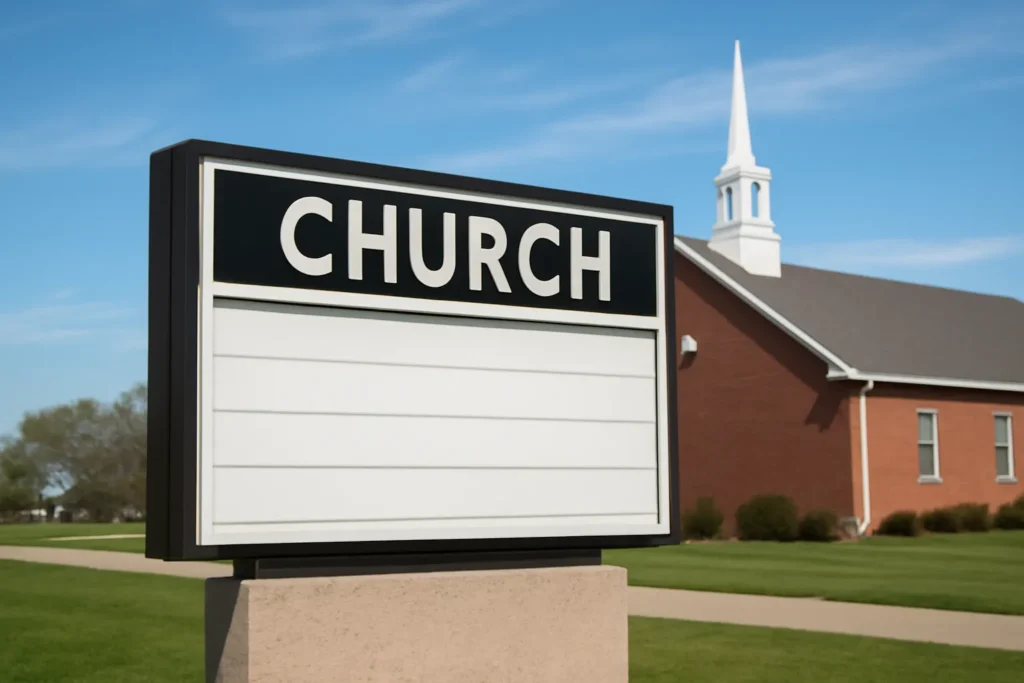
The term marquee sign covers a broad family of outdoor messaging tools used by churches. At one end are traditional movable-letter signs—a cabinet containing letters and symbols you rearrange by hand. At the other end are sophisticated digital LED marquee displays capable of automatically rotating messages, scrolling announcements, and scheduling content. In between, many churches deploy hybrid setups that pair a durable, low-maintenance base with occasional digital overlays or seasonal banners.
What unites all these forms is their shared function: to deliver short, clear, timely information to a moving audience. Because most marquee messages must be read in a few seconds, the medium must be optimized for quick comprehension. Regardless of the type, the best church marquee signs adhere to a few core principles: readability, relevance, and consistency.
Types of church marquee signs
Traditional movable-letter boards
The classic movable-letter board is iconic for a reason. It communicates human warmth—a sense that volunteers are actively keeping the sign up-to-date. These signs typically use plastic or metal letters in bold, high-contrast colors. They require regular maintenance to ensure letters are legible and letters remain on-hand.
Pros: low energy use, easy replacement of individual letters, nostalgic appeal, straightforward maintenance.
Best practices: keep copy short (6–9 words max), use high-contrast colors (white on dark backgrounds or black on light backgrounds), and check legibility from a typical vehicle approach angle (about 30–60 feet away).
Electronic LED and digital marquee displays
Digital or LED marquee systems offer dynamic capabilities that traditional boards cannot. They can display scrolling text, multiple lines of content, and even simple graphics. They are especially effective for weekly calendars, service times, and urgent messages that must update quickly.
Pros: rapid updates, ability to schedule messages, bright and highly readable at night, scalable for larger messages.
Cons: higher upfront cost, ongoing maintenance (LED modules, power consumption), potential for brightness to be intrusive if not properly controlled.
Best practices: use a stable, readable font (sans-serif is common), limit scrolling speed, include essential information in the first line, and implement ambient brightness controls to adapt to day/night cycles.
Hybrid and accessory options
Some churches opt for a hybrid approach: a durable base board with a separate, more flexible seasonal banner or a secondary digital panel for special events. This can provide the best of both worlds—consistency and warmth from the traditional component, plus the dynamism of a digital display for holidays, concerts, or outreach campaigns.
Pros: versatility, lower risk of full replacement, ability to tailor messaging to specific audiences.
Cons: complexity of maintenance, possible aesthetic mismatch if not designed cohesively.
Best practices: align color schemes and typography across components, test readability from various distances, and plan for seasonal content in advance.
Other display formats and ancillary signage
In addition to marquee signs, many churches deploy banner signs (vinyl or fabric) for special seasons, yard signs near the campus entrance, and pylon signs that rise above surrounding foliage or fences. While not traditional marquee elements, these signage types complement the main sign and help maintain visibility across multiple touchpoints.
Cons: more components to coordinate, potential visual clutter if not planned carefully.
Best practices: maintain a consistent brand voice, limit copy length, and ensure that all formats convey a unified message.
Design principles for effective church marquee signs
Typography and readability
Readability is the single most important consideration. A marquee sign must be decipherable at a distance and within a few seconds. Choose bold, simple typefaces with clear letterforms. Avoid decorative fonts for primary content and limit the number of different fonts on a single sign.
Opt for high-contrast color combinations: white on dark blue, black on yellow, or bright red on white depending on background materials.
Ensure characters are sized to be readable from the furthest viewpoint on the road.
Use punctuation sparingly; excessive symbols can reduce legibility at speed.
Color theory and branding
Color communicates mood and meaning. For church marquees, limit the palette to a few colors that reflect your brand and improve readability. Be mindful of color symbolism within your community and consider accessibility for people with color vision deficiencies.
Brand alignment: let the marquee reflect your church’s mission through consistent use of color and language.
Accessibility: maintain strong color contrast and consider the colorblind-friendly palette.
Use color to emphasize hierarchy, such as a brighter color for service times and a muted color for additional details.
Content cadence and messaging structure
Messages should be structured for quick scanning. A typical cadence might include a main message on the top line, a secondary line with time or venue, and a tertiary line for a call to action or seasonal note.
Top line: primary invitation or theme (e.g., “You Are Welcome Here”).
Second line: service times or event date.
Third line: a call to action or quick detail (e.g., “Childcare available” or “Join us for a community dinner”).
Legibility from distance and weather considerations
Outdoor signs face varying weather and lighting conditions. Materials, coatings, and protective enclosures can protect lettering from sun, rain, and wind while keeping colors vibrant.
Weatherproofing: choose materials rated for your climate; use UV-resistant coatings for signs exposed to intense sun.
Night visibility: ensure brightness levels are comfortable and compliant with local ordinances to avoid glare for drivers.
Regular maintenance checks after storms or heavy winds to verify stability and readability.
Content strategies: messaging that resonates and informs
The effectiveness of a church marquee sign hinges on content. Beyond merely listing service times, marquee messages can reflect community values, share inspirational quotes, remind about outreach, and promote volunteer opportunities. A strategic approach to content helps the sign become a reliable source of information and a beacon of welcome.
Core message categories
Worship services and service times (including Sunday, midweek services, or special liturgical events).
Planning a content calendar helps ensure variety while maintaining coherence. For instance, a monthly rhythm could include a main worship theme, a community outreach highlight, a volunteer call, and a seasonal banner update.
January–February: renewal themes (growth, renewal, new membership classes).
Spring: Easter-related messages and outreach events.
Summer: vacation Bible school, outdoor concerts, and community picnics.
Fall: back-to-church campaigns, harvest events, and school partnerships.
Winter: Advent and Christmas activities, charity drives, and family services.
Inclusive and welcoming language
The best marquee messages convey warmth and inclusion. Use language that invites people from diverse backgrounds, avoids clerical jargon, and emphasizes hospitality.
Include a friendly invitation: “All are welcome” or “Bring a friend”.
Avoid assuming familiarity with internal programs; provide a brief descriptor when introducing a less-known ministry.
Pair spiritual themes with practical information so visitors can participate without pressure.
Seasonal and event messaging: turning calendar moments into engagement
Seasonal campaigns offer natural opportunities to refresh your marquee content. By aligning the messaging with the church calendar, you create a coherent narrative that informs the community and fosters anticipation.
High-impact seasonal ideas
Advent and Christmas: emphasize themes of hope, light, and community service, plus service times and candlelight events.
Lent and Easter: highlight spiritual disciplines, services, and outreach projects.
Back-to-church campaigns: courses, orientation sessions, and newcomer welcomes.
Special concerts and outreach: announce performers, ticket information, and volunteer needs.
Community service weeks: sign-ups, drop-off times, and partner organizations.
Seasonal design considerations
Each season has unique lighting, color, and mood implications. Tailor your design elements to reflect the season while preserving readability and branding.
Use seasonal color accents that still conform to your branding guidelines.
Adjust brightness for winter evenings and bright summer days to maintain legibility.
Incorporate seasonal icons or symbols (stars for Christmas, crosses for Easter) if they align with your sign type.
A marquee sign is an investment that requires ongoing care. High durability and consistent operation protect your messaging strategy, your budget, and your reputation in the community.
Durability considerations by sign type
Movable-letter boards: ensure letters are weather-sealed in storage, check for warping, repaint or replace letters as needed, and store components properly during storms.
LED and digital displays: protect from moisture, verify power supply stability, perform firmware updates, and monitor brightness to avoid glare.
Banner and accessory signs: use weather-resistant fabrics, secure all edges, and replace brittle materials before they fail.
Routine maintenance checklist
Inspect for loose or missing letters and repair promptly.
Test electrical connections and ensure weatherproof seals.
Clean surfaces regularly to remove dirt and avoid faded colors.
Verify sign visibility during dusk and night conditions and adjust as needed.
Document updates and keep a content calendar to prevent outdated messages from lingering.
Safety and regulatory considerations
Local ordinances may govern sign size, brightness, and placement. Always check zoning codes and obtain necessary approvals before installation or significant changes. In some areas, there are restrictions on color and animation, especially for residential neighborhoods or around schools.
Accessibility, inclusivity, and community trust
An effective marquee sign communicates clearly to people with diverse abilities. Clarity, simple language, and predictable patterns help everyone understand the message quickly.
Plain-language wording reduces confusion and makes the sign welcoming to visitors new to the church.
Universal symbols (arrows, clocks, date formats) can reinforce meaning when used consistently.
Consider contrast accessibility for color-impaired readers and ensure font sizes are legible from a safe driving distance.
Provide multiple contexts for the same information across different channels (signs, website, social media) so that people can engage in their preferred way.
Technology, integration, and modern outreach
The most effective marquee signs today embrace a balanced blend of classic readability and digital efficiency. Digital capabilities enable automation, scheduling, and cross-channel synergy, while traditional signs retain human warmth and reliability.
Automation and scheduling
For digital displays, automation allows you to choreograph messages around service times, weather alerts, or last-minute changes. This reduces manual updates and ensures consistency.
Schedule weekly service times in advance.
Publish weather-related notices automatically when severe weather is forecast.
Coordinate messages with church social calendars and partner organizations.
Integration with online presence
A marquee sign can complement your online presence. Simple QR codes or short links on the sign can direct people to specific pages for event registrations, volunteer sign-ups, or live streams.
QR codes: provide quick access to event sign-ups or service livestreams.
Short URLs: use easy-to-remember web addresses for event pages.
Coordinate the on-screen message with the digital campaign for maximum effect.
Content governance for multi-user environments
When multiple teams manage a marquee, a simple governance framework helps avoid conflicting messages and maintains a coherent voice.
Designate a content owner responsible for approvals and updates.
Publish a content calendar that outlines what is posted when, including seasonal variations.
Provide approved wording templates to ensure consistency across all sign formats.
Budgeting, procurement, and long-term value
Churches vary widely in budget and scale. Whether you are upgrading a decades-old movable-letter sign or installing a modern LED system, a disciplined procurement approach helps maximize impact and longevity.
Cost considerations by sign type
Movable-letter boards: low entry cost, minimal energy use, ongoing labor for updates.
LED digital signs: higher upfront cost but lower ongoing maintenance for updates; potential energy savings over time.
Banner displays: affordable on a per-season basis; best used for temporary or supplemental messaging.
When evaluating a marquee, consider not just the purchase price but also installation, ongoing maintenance, power consumption, and potential software updates. A longer-term view often reveals lower total costs for well-designed digital systems that reduce labor hours for updates.
Choose reputable vendors with demonstrated experience in faith communities. Request references, verify warranties, and ask for demonstrations of readability from typical distances. Durability assurances—such as weatherproof ratings, UV resistance, and warranty terms—are especially important for outdoor installations.
Case studies and practical examples
While every church context is unique, several practical examples illustrate how thoughtful marquee design and messaging can enhance community engagement.
Case example A: a small-town church with a traditional board
This church relied on a movable-letter board for decades. They refreshed the font size and color contrast, updated the messaging cadence, and introduced a monthly content calendar. The sign became a reliable source of weekly service reminders and community outreach events. The leadership observed an uptick in attendance on fast-approach dates and improved volunteer sign-up participation for monthly meals.
Case example B: a mid-size church with a hybrid system
A hybrid approach combined a sturdy traditional cabinet with a smaller digital panel for urgent notices. The digital component handled weather alerts and event countdowns, while the traditional board maintained warmth and accessibility for spontaneous messages. The result was a sign that felt both timeless and current, with improved readability at night due to enhanced lighting control.
Case example C: a multi-campus church using color-brand alignment
This church used a consistent color palette across all display formats, ensuring uniform branding from the marquee to the website and social channels. Seasonal campaigns were synchronized across locations, creating a cohesive sense of belonging for members traveling between campuses.
Common mistakes to avoid
Overloading the sign with text: messages should be concise and readable in seconds. If you can’t read it from the road, simplify.
Inconsistent branding: mismatched fonts or color schemes undermine trust and recognition.
Ignoring local regulations: failing to comply with ordinances can lead to delays or fines and damages credibility.
Poor maintenance: broken letters or malfunctioning LED modules reduce trust and effectiveness.
Not updating regularly: stale messages signal inactivity and can deter new visitors.
Conclusion: turning a sign into a welcoming invitation
A church marquee sign is more than a sign; it is a daily ambassador for your faith community. Whether you lean toward the classic charm of movable-letter boards or embrace the versatility of digital equation-based displays, the overarching goals remain the same: clarity, accessibility, and invitation. Thoughtful design, purposeful content, and reliable maintenance together create a marquee that not only conveys information but also communicates hospitality.
By exploring types of signs, applying design principles, planning content with a calendar, and integrating with your digital presence, you can refresh your church marquee to be both a practical resource and a source of inspiration for your community. The result is a sign that serves as a reliable first impression, a beacon for outreach, and a steady reminder that this place is open to everyone seeking connection, comfort, and guidance.
If you are considering an upgrade or a fresh installation, start with a clear brief: identify your primary messages, define your readability benchmarks, and align the project with your church’s mission and values. Engage stakeholders, gather input from volunteers responsible for updates, and test readability from common driving distances. With careful planning and thoughtful content, your marquee sign can become a powerful instrument of welcome, community building, and spiritual invitation—today and for years to come.











Leave a Reply