Introduction: Why lighting matters in church spaces
Lighting is a foundational element of church design that influences perception, function, and spirituality. In a sacred space, the way light falls on architecture, artwork, and people can shape the mood of a service, highlight focal points, and support the transfer of theology from spoken word to lived experience. This guide explores the many facets of church lighting, including technical considerations, design strategies, and practical recommendations for different moments of worship and community life. Whether you are planning a new facility, renovating an aging building, or seeking to improve energy efficiency, thoughtful lighting is an investment in accessibility, beauty, and mission.
What makes ecclesiastical lighting distinct
Ecclesiastical lighting encompasses more than brightness. It must respect tradition and symbolism while meeting contemporary standards of safety, energy use, and adaptability. In many church contexts, lighting supports the liturgy, accentuates architectural features, and creates a sense of welcome for congregants, visitors, and performers. The best lighting plan combines technical accuracy with aesthetic sensitivity, ensuring that illumination is appropriate for nave gatherings, chancel rituals, and special events such as weddings, funerals, or concerts.
Common goals for sanctuary lighting include: enabling clear visibility for reading and preaching, guiding attention to the pulpit and altar, and generating a human-scale ambience that fosters reverence and proclamation. In this guide, we will refer to various terms—sanctuary illumination, altar lighting, chancel lighting, and liturgical lighting—as part of the same family of design concerns.
Lighting goals in a church setting
Functionality — Enable comfortable sightlines for reading, singing, and lecturing; ensure safety in circulation spaces; support stage performances and choirs.
Atmosphere — Create a sense of reverence, warmth, and focus appropriate to liturgy and ceremony; transition smoothly between networked events and everyday use.
Aesthetics — Complement architecture, stained glass, statuary, and artwork; reveal textures, forms, and color without glare or harsh shadows.
Flexibility — Adapt to a bright Sunday service, a candlelight vigil, a wedding, or a concert with minimal disruption.
Energy efficiency — Reduce operating costs, extend fixture life, and align with stewardship values while maintaining quality of light.
Accessibility & safety — Provide even illumination for mobility-impaired attendees and emergency egress paths in line with codes.
Principles of effective lighting design for churches
A robust lighting plan balances ambient, task, and accent lighting. It also considers color temperature, CRI, glare control, and controls that harmonize with the church calendar and service program.
Ambient lighting provides the base level of illumination across large areas, such as the nave and lobby, ensuring safe movement and a comfortable overall brightness.
Task lighting focuses on specific activities—reading from a pew Bible, presenting from a lectern, or guiding a professional choir conductors’ area.
Accent lighting highlights important architectural features, stained glass windows, artwork, sculpture, or ceremonial objects to deepen meaning and visual interest.
Color temperature and rendering
In most church settings, a warm-to-neutral range is preferred. Color temperature typically falls between 2700K and 4000K, with older or traditional spaces leaning toward 2700K–3000K for a warmer atmosphere and modern spaces leaning toward 3500K–4000K for clarity and vibrancy. The CRI (color rendering index) should be high—ideally CRI 90+—to reproduce the colors of fabrics, paintings, wood tones, and stained glass accurately, ensuring that people’s skin tones and liturgical colors appear natural under artificial light.
Glare and contrast management
A successful lighting plan minimizes glare on stages and screens while avoiding oppressive shadows in seating areas. It uses proper shielding, indirect or semi-direct lighting, and carefully aimed fixtures to maintain even coverage. The result is a space where worshippers can focus on the message, the music, and the ritual without distraction.
Lighting technologies and equipment
The repertoire of lighting technologies available to houses of worship has expanded dramatically. Manufacturers offer solutions that optimize energy use, extend fixture life, and integrate with modern building automation systems. Below is an overview of common categories and what they bring to a church setting.
Ambient lighting options
LED downlights — Energy-efficient general illumination that replaces old incandescent or halogen sources.
LED coves and troughs — Light cove lines along ceilings to wash walls with a soft, even glow.
Indirect lighting — Fixtures that bounce light off ceilings or walls to reduce glare and create a halo effect around architectural features.
Linear lighting — Continuous runs of light that create uniform illumination across long nave spaces.
Task and focal lighting
Lectern and pulpit lighting — Focused illumination for readings and preaching that minimizes shadows on the text.
Altar lighting — Concentrated illumination on the altar area to emphasize sacred actions and liturgical gestures.
Pulpit lighting — Targeted light for speakers or ministers during ceremonies.
Choir and organ lighting — Enhanced visibility for performers without overwhelming the audience.
Accent and decorative lighting
Stained glass illumination — Backlighting or front-lighting of windows to reveal color and texture.
Sculpture and icon lighting — Small fixtures or track lighting to draw attention to art and statues.
Architectural highlights — Grazing light on arches, columns, and moldings to reveal form.
Cove and pendant accents — Used to frame ceilings, arches, or altarpieces with a controlled glow.
Control systems
Modern churches benefit from flexible control strategies that simplify operation and support calendar-based changes. Common approaches include:
Central lighting controls with wall panels or touchscreens for quick scene changes during services.
Dimming systems (0–10V, DALI, or DMX) to smoothly adjust brightness and create mood transitions.
Scene-based controls for different events (e.g., Sunday service, weddings, concerts) with preset lighting scenes.
Daylight harvesting that modulates artificial light in response to natural light levels to maintain consistent ambience and energy savings.
Automation and scheduling to align lighting with service times, choir rehearsals, and security requirements.
Power and efficiency considerations
For long-term stewardship, energy efficiency is a primary driver. LED technology is the standard due to longevity and low operating costs, but careful design is essential to prevent color shifts over time and ensure consistent performance across fixtures. An energy audit together with a lighting calculation (often expressed in lux or foot-candles) helps determine the right number of fixtures and wattage to achieve the desired illumination levels in each space.
Lighting kinetics: how light evolves with the service
A well-crafted service plan uses lighting choreography to guide attention through the liturgy. Consider how light can:
Introduce the assembly with a warm, welcoming ambience during gathering and announcements.
Support the proclamation of the Word during readings and sermons with clear, neutral lighting on the lectern.
Emphasize the sacraments and sacred moments with more intimate, restrained lighting around the altar or chancel.
Transition to a contemplative mood during prayer or silent reflection.
Highlight musical moments with synchronized lighting cues that lift the performance without overpowering it.
Seasonal and calendar-based lighting
Churches often observe liturgical seasons or community calendars that require lighting variation. Strategies include:
Seasonal color temperature adjustments (warmer in Advent and Christmas; cooler or more balanced in Lent and Easter seasons) to reflect mood and symbolism.
Thematic color accents for special liturgies with gobo patterns or tinted filters on fixtures when appropriate.
Event-specific cues (weddings, funerals, concerts) that create a distinct atmosphere while preserving overall coherence with the building’s character.
Lighting for specific spaces within a church
Churches vary in size, shape, and program, but several spaces recur across denominations. Here are design considerations for the most common areas.
Nave and general assembly areas
Uniform ambient light with gentle glare control to support readability and movement.
Seating-specific lighting to ensure even coverage for congregants without hot spots near the front.
Floor-level lighting can aid visibility but should be subtle to avoid drawing attention away from the service.
Chancel and sanctuary zones
Focused downlighting on pulpit, lectern, altar, and sacred objects to clarify focus during liturgical acts.
Backlighting or silhouettes for choir and organ alcoves to create depth without sacrificing legibility.
Control separation between nave and chancel lighting to allow the chancel to stand out when required.
Chancel arch, stained glass, and artwork
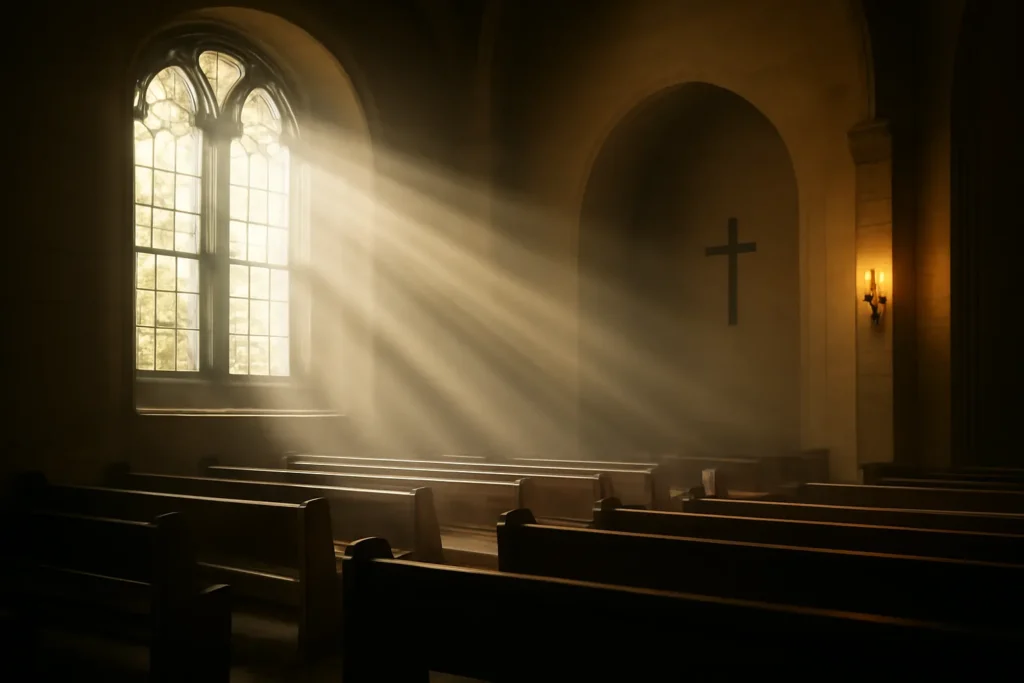
Backlighting of stained glass to reveal color and texture in daylight, or front-lighting to bring out details when sun is low.
Accent lighting for statues, paintings, and iconography that respects the artwork’s preservation needs.
Low-glare fixtures with shields or diffusers to avoid specular reflections on glass and polished surfaces.
Entry, hallways, and gather spaces
Even, welcoming lighting in vestibules and corridors to orient visitors and keep safety clear.
Motion-activated or low-level lighting for after-hours access and security without excess energy use.
Exterior lighting and landscape
Approach lighting that enhances visibility at entrances and creates a sense of shelter.
Accent exterior lighting to reveal architectural silhouettes and meaningful landmarks after dark.
Light pollution considerations to minimize spill onto neighboring properties and the night sky.
Case considerations: planning, procurement, and installation
A thoughtful process helps ensure the lighting system meets current needs and remains adaptable for the future. Key steps include design charrettes with clergy, staff, musicians, ushers, and maintenance teams; an objective evaluation of existing lighting; and a phased approach to installation that minimizes service disruptions.
Assessing needs and priorities
Identify the primary activities in each space (liturgy, teaching, music, weddings, funerals, concerts).
Catalog fixtures to be retained or replaced, and determine compatibility with new control systems.
Determine the required illuminance levels for each space, considering both safety and aesthetics.
Clarify ADA compliance and accessibility requirements for seating, stairs, and exits.
Budgeting and return on investment
Compare upfront costs with long-term operating costs, including lamp replacement, maintenance, and energy use.
Explore rebate programs or incentives for LED retrofits and energy-efficient controls.
Plan for scalable upgrades, such as modular fixtures or data-enabled controls, to accommodate future needs.
Installation and commissioning
Ensure professional electrical work adheres to local codes, fire safety, and building standards.
During commissioning, verify color consistency across fixtures and adjust light levels to achieve a cohesive look.
Document the system with a maintenance plan that includes fixture life, driver replacements, and control programming notes.
A well-maintained lighting system preserves both the functional and aesthetic goals of the space. Regular inspection ensures safety and keeps color and brightness consistent. Key practices include cleaning optics, checking drivers and control modules, replacing lamps before failure, and updating control scenes as the church’s calendar or programs change.
Routine care and safety
Schedule fixture cleaning to maintain light output and color rendering.
Inspect wiring, drivers, and connections for signs of wear and overheating.
Test emergency lighting and exit signs periodically and log results for compliance.
LED maintenance often requires fewer replacements than legacy technology, but driver or control compatibility must be checked.
Consider retrofit kits that preserve existing housings while upgrading to modern LEDs and control options.
Plan for future-proof controls that can integrate with newer architectural systems and data networks.
Case studies and practical examples
Across different church contexts, lighting strategies vary depending on architectural heritage, program emphasis, and community aesthetics. The following hypothetical examples illustrate common approaches:
Case A: Traditional nave with rich woodwork and stained glass
Ambient LED downlighting with warm color temperature (2700K–3000K) to preserve a traditional feel.
Backlit stained glass or side-lighting of windows to reveal color without glare.
Soft uplighting on columns or arches to accent architecture while keeping the focus on the pulpit.
Simple control scenes for ordinary services, with a separate scene for candles and processions during special liturgies.
Case B: Modern sanctuary with clear platform focus
Neutral white light (around 3500K–4000K) for crisp readability and contemporary feel.
Accent lighting on altar and cross to emphasize sacred actions.
Integrated timing and dimming to coordinate with video projections and live performances.
Energy management with daylight harvesting from large windows and skylights when available.
Case C: Multi-use house of worship serving concerts and community events
Flexible DMX or DALI control for stage lighting that can be programmed for musical performances.
Low-glare task lighting for reading materials during meetings and classes.
Audience-friendly ambience during social gatherings with warm, inviting lighting in foyers and gathering spaces.
Conclusion: A holistic approach to church lighting
Lighting in a church is never merely a technical detail; it is a living element of the space that supports worship, education, music, and community. By integrating strategic design, high-quality light sources, responsive controls, and a robust maintenance plan, a church can achieve a lighting system that is beautiful, reliable, and faithful to its mission. The best plans respect tradition while embracing innovation, ensuring that the sacred space remains luminous in every season and for every gathering.
If you are embarking on a lighting project, consider partnering with professionals who understand the unique demands of ecclesiastical environments. A balanced approach—one that values craftsmanship, energy stewardship, and liturgical sensitivity—will yield returns in accessibility, participation, and spiritual impact that extend far beyond the visible glow of the fixtures.
















Leave a Reply