All 10 commandments: meaning and modern applications
All 10 commandments: meaning and modern applications
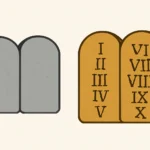
If you have ever wondered what the Bible actually means by all 10 commandments, the short answer is that they are a set of covenant instructions about loving God and treating other people faithfully. They appear most fully in Exodus 20 and are repeated in Deuteronomy 5.
The commandments address worship, speech, rest, family responsibilities, human life, marriage, property, truth, and desire. Their numbering and wording can vary among Jewish, Catholic, Orthodox, and Protestant traditions, but the central teachings are recognizable across these interpretations.
A useful way to read them: the first commandments focus on your relationship with God, while the later commandments focus on how your choices affect other people.
The Ten Commandments are not presented as a random list of religious rules. In the biblical account, they are given to the Israelites after their deliverance from slavery in Egypt. That setting matters: the commandments describe how a rescued people should live in a covenant relationship with God and with one another.
They establish boundaries for worship and standards for community life. Some are stated as direct prohibitions, such as the commands against murder and theft. Others establish positive priorities, including honoring parents and setting aside a day for rest.
Many Christians understand the commandments as revealing sin and showing the need for God’s mercy. They may also read them as wise principles that shape a life of integrity. Jewish interpretation places them within the larger Torah and the covenant between God and Israel, rather than treating them as an isolated checklist.
The commandments are often grouped into two broad areas:
Worship and devotion: loyalty to God, rejecting idols, honoring God’s name, and observing sacred rest.
Human relationships: honoring parents, protecting life, honoring marriage, respecting property, speaking truth, and controlling envy.
Why different traditions number the commandments differently
The biblical passages do not number the statements with labels such as “commandment one” and “commandment two.” Religious traditions organize the text differently, especially around the opening command about other gods, the prohibition of idols, and the two forms of coveting.
In many Protestant and Orthodox presentations, the command about having no other gods is separated from the command against making or worshiping idols. The two coveting prohibitions are then usually treated together or divided in a different way.
In the Catholic and Lutheran traditions, the opening teachings about other gods and idols are commonly combined as the first commandment. The final teaching about coveting is divided into separate commands concerning a neighbor’s spouse and a neighbor’s possessions.
Jewish traditions may count the opening declaration that God brought Israel out of Egypt as the first statement, followed by the commands about exclusive worship and idols. These differences do not mean that one tradition has more or fewer teachings. They reflect different ways of organizing the same biblical material.
For clarity, the explanations below follow a common Protestant ordering. If you use a Catholic, Orthodox, or Jewish catechism, the numbers may differ even when the underlying subjects are similar.
1. Have no other gods besides God
The first commandment calls for exclusive loyalty to God. It rejects the idea that the God of Israel can be placed alongside rival gods, spiritual powers, political authorities, or personal masters. Worship is not meant to be divided among competing objects of ultimate trust.
For ancient Israel, this command distinguished worship of the one God from the surrounding cultures that served many deities. For contemporary believers, the question can be broader: what has become the highest authority in your life? Money, status, political identity, romantic approval, achievement, or personal comfort can all become controlling priorities.
This does not mean that work, family, art, or civic responsibility are automatically wrong. The concern is ultimate allegiance. A good part of life becomes destructive when it demands the loyalty, fear, or dependence that belongs to God alone.
Practicing this command may involve examining what shapes your decisions when values conflict. If you repeatedly sacrifice honesty, compassion, family responsibilities, or conscience to protect an ambition, that ambition may be functioning like an idol even if you never call it one.
2. Do not make or worship idols
The second commandment warns against making images or objects into substitutes for God. In its original setting, this addressed the manufacture and worship of religious images. It also challenged the attempt to control or reduce God by representing the divine through something humans have made.
The command is not simply a ban on every image, sculpture, or artistic representation. The Bible itself contains references to artistic objects used in religious contexts. The central issue is misdirected worship: treating a created thing as divine or using an object to manipulate access to God.
Idolatry can also be understood as giving created things a role they cannot bear. A political movement may become idolatrous when it is treated as morally infallible. A religious leader may become an idol when followers excuse every failure and surrender their judgment. A possession may become an idol when its loss seems to threaten your entire identity.
A practical question is whether you are using a symbol to point beyond itself or trusting the symbol as a source of power. The commandment protects worship from being reduced to an object that can be owned, managed, or used for personal advantage.
3. Do not misuse God’s name
The third commandment concerns more than avoiding casual profanity. It prohibits taking God’s name in a false, empty, or dishonest way. A person can misuse God’s name through speech, promises, public claims, or religious actions that falsely present personal desires as divine authority.
Using God’s name to support a lie is a direct example. So is making a religious promise that you never intend to keep. The command also challenges people who invoke God to intimidate others, win an argument, excuse cruelty, or give their own opinions an authority they have not earned.
Religious language carries weight because it shapes how people understand truth and responsibility. When leaders claim that God endorses their financial schemes, political demands, or personal grudges, the harm can extend far beyond careless speech.
Honoring God’s name means speaking about faith with reverence and honesty. It also means acknowledging uncertainty when you are uncertain rather than presenting every interpretation as an unquestionable message from God.
4. Keep a sacred day of rest
The fourth commandment tells God’s people to remember the Sabbath and keep it holy. In the Old Testament, the Sabbath is the seventh day, set apart for rest from ordinary work. It also recalls God’s pattern of creation and provides relief for servants, animals, family members, and others who might otherwise be forced to work without pause.
Different Christian traditions understand the continuing practice of Sabbath in different ways. Some observe Saturday, some give special significance to Sunday, and others emphasize the broader principle of regular worship and rest rather than requiring one particular day. Jewish Sabbath observance remains connected to the seventh day and has its own detailed practices.
The command challenges the belief that your value depends entirely on productivity. Rest is not merely a reward for finishing everything, because everything is never finished. A regular period without ordinary labor can make room for worship, relationships, recovery, gratitude, and attention to people who are often overlooked.
Keeping this principle may require practical limits: protecting a block of time from routine work, reducing unnecessary consumption, turning off work notifications, or declining the expectation that you must always be available. The specific practice depends on your tradition and circumstances, but the purpose is holy rest rather than endless output.
5. Honor your father and mother
The fifth commandment calls children to honor their parents. In its original context, honoring parents included respect, appropriate obedience, and responsibility toward older family members. The command recognizes the family as an important place where people receive care, instruction, identity, and protection.
Honoring parents does not mean approving every action they take or obeying every demand forever. Adults may need to establish boundaries with parents who are abusive, manipulative, neglectful, or unsafe. Respect can include speaking truthfully, refusing harmful behavior, and seeking help when a family relationship is damaging.
The command also raises questions about how a society treats older people and caregivers. If parents and elders are honored, families and communities should not abandon them when they become dependent. Care may involve time, financial support, practical assistance, or arranging professional help when personal caregiving is not possible.
For children, honoring parents can mean listening, showing gratitude, and taking household responsibilities seriously. For adults, it often means relating to parents with maturity: neither treating them as infallible authorities nor reducing them to their past mistakes.
6. Do not murder
The sixth commandment protects the value of human life. The Hebrew wording refers specifically to unlawful killing, so it should not be treated as a simple statement about every possible death in every circumstance. Questions involving war, self-defense, capital punishment, and accidental death have received different interpretations across religious traditions.
At its core, the command rejects the deliberate destruction of innocent human life. It also points toward the conditions that make violence possible: hatred, dehumanization, revenge, abuse, and indifference to another person’s suffering.
Jesus’ teaching in the Gospels connects the command against murder with anger and contempt, showing how violence can begin in the heart and in speech before it becomes physical. That does not erase the difference between an insulting comment and murder. It does show that a faithful response should address the attitudes that make harm more likely.
Applying this command includes protecting vulnerable people, refusing to glorify violence, taking threats seriously, and seeking help when someone may be in danger. It also includes caring for your own safety and contacting emergency services when there is an immediate risk of harm.
The seventh commandment forbids adultery, the violation of a marriage through sexual unfaithfulness. It protects marital promises and recognizes that sexual betrayal can injure spouses, children, families, and communities.
The command is not limited to the moment an affair becomes physical. Deception, secret emotional intimacy, hidden communication, and deliberately cultivating a relationship that undermines a marriage can also violate the trust marriage requires. Clear boundaries matter because trust is easier to protect before secrecy becomes a pattern.
Different traditions disagree about marriage, divorce, remarriage, and sexual ethics, so the command is interpreted within broader religious teachings. Still, its central concern is clear: do not treat a spouse’s commitment, body, or trust as something you may exploit for private gratification.
For married people, faithfulness includes honesty about friendships, finances, technology, and sexual boundaries. For unmarried people, the principle still highlights the importance of treating others as whole persons rather than as opportunities for conquest or consumption.
8. Do not steal
The eighth commandment forbids taking what belongs to another person. Theft includes obvious acts such as shoplifting, burglary, fraud, and embezzlement, but the broader principle also applies to unfair appropriation of another person’s time, labor, ideas, money, or property.
Modern examples can include using someone’s work without credit, refusing to pay a worker fairly, falsifying expenses, keeping money that was mistakenly sent to you, or exploiting a customer’s lack of knowledge. Digital access does not remove the moral issue: taking data, paid content, accounts, or creative work without permission can still be theft.
The command assumes that people may possess goods and that community life requires respect for legitimate ownership. It does not mean that every economic arrangement is automatically just. A person can follow the basic rule against stealing while still asking whether wages, contracts, lending practices, or business systems exploit people.
Respect for property should be joined with concern for those in need. Generosity, fair dealing, restitution, and support for the vulnerable help create the kind of community the commandment intends. If you have taken something, making restitution where possible is more faithful than simply feeling regret.
9. Do not give false testimony against your neighbor
The ninth commandment specifically addresses false testimony, especially the kind of lie that harms another person in a legal or community setting. A false accusation can cost someone freedom, safety, reputation, livelihood, or family relationships.
The principle extends to gossip, manipulated evidence, dishonest reviews, edited recordings, misleading headlines, and repeating rumors as facts. Not every mistake is a deliberate lie, but carelessness does not remove the responsibility to correct false information once you learn that it is wrong.
Truthfulness requires more than avoiding technically false statements. You can mislead by leaving out a crucial fact, using selective evidence, or framing an event to make someone appear guilty. You can also violate the spirit of the command by sharing private information merely because it is interesting.
Before repeating a serious claim, ask whether you know it is true, whether the source is reliable, and whether sharing it serves a legitimate purpose. When you have harmed someone with false information, a private apology may not be enough; correction should reach the people who received the original claim.
10. Do not covet what belongs to your neighbor
The final commandment addresses disordered desire. To covet is not simply to notice that another person has something desirable. It is to nurture an inordinate longing to possess what belongs to that person, often with resentment, entitlement, or a willingness to cross moral boundaries.
The command lists several forms of a neighbor’s household and possessions, including a spouse, servants, animals, and property. The details reflect the social world of the ancient text. The underlying concern is broader: do not allow envy to turn another person’s life into a target for acquisition or sabotage.
Coveting can lead to the other commandments being broken. Envy may fuel theft, adultery, fraud, slander, or violence. It can also damage you internally by making gratitude impossible. You may have real needs, but coveting is not the same as seeking justice or working toward a legitimate goal.
A healthier response to envy begins with naming what you actually want. Perhaps you want financial security, companionship, recognition, rest, or a different kind of work. Once the deeper desire is clear, you can pursue it honestly without treating someone else’s success as an offense against you.
Practical ways to apply the commandments today
The Ten Commandments are easy to reduce to a list of prohibitions. Their practical value becomes clearer when you use them to examine habits, motives, and relationships. You can move from general principles to concrete decisions by asking how each commandment affects the way you spend money, use authority, speak about others, and handle conflict.
Review your priorities: identify what receives your time, money, attention, and emotional dependence.
Protect honest worship: avoid treating religious objects, leaders, or claims as substitutes for God.
Keep your promises: make fewer promises if necessary, but take commitments seriously.
Schedule meaningful rest: create recurring time for worship, recovery, relationships, and reflection.
Set healthy family boundaries: show respect without enabling abuse or surrendering responsible judgment.
Protect life and dignity: reject dehumanizing speech and respond appropriately to threats or violence.
Practice sexual faithfulness: be transparent about boundaries and avoid secret behavior that undermines trust.
Return what is not yours: correct financial, digital, or material mistakes rather than benefiting from them.
Verify serious claims: pause before forwarding accusations, rumors, or emotionally charged content.
Translate envy into an honest goal: pursue what you need without trying to take it from someone else.
Some common mistakes make the commandments harder to understand:
Reading them as unrelated rules: they form a moral framework connecting love for God with responsibility toward neighbors.
Focusing only on visible actions: several commandments also address motives, speech, desire, and hidden deception.
Using them only against other people: self-examination should come before public condemnation.
Ignoring mercy and restitution: repentance involves turning away from wrong and repairing harm where possible.
Assuming one numbering system is universal: traditions divide and label the commandments differently.
Applying ancient words without context: understand the original subject before extending the principle to modern situations.
When a situation is unclear: ask which choice best protects truthful worship, human dignity, faithful relationships, and the well-being of your neighbor. If immediate danger, abuse, or criminal conduct is involved, seek qualified help rather than handling it alone.
How Jesus’ teaching relates to the Ten Commandments
In the Gospels, Jesus does not treat the commandments as a license for self-righteousness. He engages them by emphasizing the heart of the law: love for God and love for one’s neighbor. His teaching connects outward actions with inward motives, especially in areas such as anger, lust, truthfulness, retaliation, and care for the vulnerable.
When asked about the greatest commandment, Jesus identifies wholehearted love for God and pairs it with love for one’s neighbor. This does not erase the Ten Commandments. It provides a way to understand their direction: faithful obedience is not merely avoiding technical violations but becoming the kind of person who seeks another’s good.
Christian communities differ on how the commandments relate to salvation, grace, and the continuing role of Old Testament law. Many teach that people are not saved by flawless rule-keeping, while also affirming that the commandments reveal God’s moral purposes. In that view, grace does not make dishonesty, violence, betrayal, or exploitation harmless.
The commandments therefore work on two levels. They expose wrongdoing that needs forgiveness, and they offer a pattern for lives marked by worship, truth, restraint, justice, faithfulness, and care.
Questions to ask when a commandment meets a modern problem
Modern life often presents situations that are not named directly in Exodus 20 or Deuteronomy 5. Social media, artificial intelligence, online commerce, workplace surveillance, genetic technology, and complicated financial systems can make a simple rule feel difficult to apply.
Begin by identifying the human issue underneath the technology or circumstance. A question about reposting an image may involve property, truth, privacy, and consent. A question about workplace ambition may involve honest dealing, rest, coveting, and the treatment of other employees.
These questions can help you reason carefully:
Who could be harmed, deceived, exploited, or excluded by this choice?
Am I being truthful about my motives and the facts?
Am I treating a person as a neighbor or merely as a tool?
Would I make the same decision if it were publicly known?
What responsibility do I have to repair harm if I have already acted wrongly?
What would faithful action look like beyond simply avoiding punishment?
These questions do not replace prayer, Scripture, wise counsel, or the teachings of your religious community. They help bring the commandments into ordinary decisions, where character is formed gradually through repeated choices.
Why the Ten Commandments still matter
The Ten Commandments continue to matter because they address recurring human problems rather than one temporary social trend. People still struggle with divided loyalties, false authority, relentless work, family conflict, violence, sexual betrayal, theft, lies, and envy.
Read carefully, the commandments are more demanding than a basic list of legal restrictions. They ask what you worship, whom you trust, how you use power, whether your words can be believed, and whether your desires respect the freedom and dignity of others.
Their lasting challenge is both personal and communal. They call you to examine your own conduct, while also encouraging families, congregations, workplaces, and governments to build practices that protect life, truth, rest, faithfulness, and justice.
Frequently asked questions
Where are all 10 commandments found in the Bible?
The Ten Commandments are recorded most fully in Exodus 20:1–17 and repeated in Deuteronomy 5:4–21. The two passages are substantially parallel but have some differences in wording and emphasis, especially in the explanation of Sabbath observance. Other biblical passages refer back to these teachings without reproducing the complete list.
Why do Catholic and Protestant lists of the commandments look different?
The traditions organize the biblical statements differently. Catholic and Lutheran numbering commonly combines the teachings about other gods and idols, then divides the final teaching about coveting. Many Protestant lists separate the first two subjects and treat coveting as one command. The content is organized differently, not expanded or reduced.
Did Jesus replace the Ten Commandments?
Christian interpretations differ on the commandments’ covenantal and legal role, but Jesus’ teaching does not treat them as irrelevant. In the Gospels, he emphasizes love for God and neighbor and explains that obedience includes motives such as anger, lust, honesty, and mercy. Christians commonly see his teaching as deepening the commandments’ meaning rather than making moral responsibility unnecessary.
How can someone use the Ten Commandments without becoming judgmental?
Start with self-examination instead of using the commandments mainly to criticize other people. Consider your motives, speech, habits, and responsibilities, then make amends where you have caused harm. Humility also means recognizing that applying ancient teachings to complicated situations may require prayer, context, wise counsel, and compassion for people facing abuse or hardship.
















Leave a Reply