Weekly Bible verse for encouragement and reflection
Weekly Bible verse for encouragement and reflection
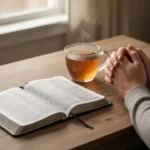
This week’s Bible verse is Philippians 4:6–7. Paul encourages believers to bring their worries to God through prayer, petition, and thanksgiving, trusting that God’s peace can guard the heart and mind in Christ.
Rather than treating the verse as a slogan, read it as an invitation to replace anxious isolation with honest prayer. The passage does not promise that every difficult circumstance will disappear immediately. It points you toward a different response: name what troubles you, ask God for help, give thanks for his faithfulness, and remain open to the peace he provides.
Weekly practice: Read Philippians 4:6–7 slowly once each morning. Write down one concern, one request, and one reason for gratitude. Return to the same passage throughout the week instead of rushing to a new verse each day.
A weekly Bible verse gives your attention a steady place to return. Reading many passages can be valuable, but focusing on a single text allows you to notice its words, setting, promises, and demands more carefully.
Philippians 4:6–7 is especially suitable for a week of reflection because anxiety is not limited to one situation. You may be carrying uncertainty about work, health, finances, family, decisions, or the future. The passage meets that experience directly while also asking you to practice dependence on God rather than pretending you are unaffected.
The surrounding chapter adds helpful context. Paul writes about joy, gentleness, prayer, contentment, and the discipline of directing the mind toward what is good. The verse belongs to a larger pattern of Christian life, not a formula that guarantees a particular result on a particular schedule.
What Philippians 4:6–7 means in context
Philippians is a letter associated with the apostle Paul and written to the Christian community in Philippi. Its tone includes gratitude, affection, encouragement, and repeated attention to joy in difficult circumstances. Paul’s teaching about anxiety appears near the end of the letter, where he gives practical guidance for daily faithfulness.
The instruction to pray does not mean that concern is a moral failure. Fear and uncertainty are real human experiences. Instead, the passage teaches you not to let anxiety become the only voice shaping your thoughts, choices, and view of God.
Three movements stand out:
Bring the concern to God: Prayer begins with relationship, not performance. You speak to God because you believe he hears.
Make a specific request: General worry can become clearer when you identify what you are asking for and why it matters.
Practice thanksgiving: Gratitude does not deny pain. It remembers God’s goodness while the problem is still present.
The result Paul describes is God’s peace, which he presents as greater than human calculation. That peace is not necessarily a calm mood or an immediate answer. It can mean a guarded inner life, renewed perspective, and the ability to continue faithfully even while circumstances remain unresolved.
How to study your weekly Bible verse step by step
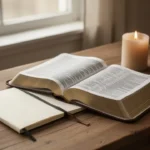
A consistent method helps you move from a quick reading to genuine understanding. Set aside approximately 10 to 15 minutes, preferably at a time when you can read without interruption. You do not need an elaborate study setup; a Bible, notebook, and quiet place are enough.
Read the passage several times. Read Philippians 4:6–7 in the translation you normally use. Then read the verses before and after it so you can hear the thought in context.
Observe the main actions. Notice what the passage asks you to do, what it says God does, and what response it expects from you.
Identify your present concern. Name one situation that is producing anxiety. Avoid choosing every problem at once; begin with the concern that most needs prayer today.
Turn the concern into a request. Ask for wisdom, courage, patience, reconciliation, provision, or another specific form of help.
Add thanksgiving. Mention one gift, relationship, truth, or past act of faithfulness for which you are grateful.
Choose a faithful action. Decide what the passage changes in your behavior today, such as making a difficult phone call, resting responsibly, apologizing, or seeking wise counsel.
Review the verse at night. Consider when anxiety shaped your thoughts and when you noticed peace, help, or a more grounded response.
This process keeps Bible reading connected to real decisions. Reflection is not complete when you understand the words intellectually. It becomes more substantial when the passage influences how you speak, respond, prioritize, and care for other people.
Good questions slow down familiar language. They help you distinguish what the passage actually says from what you assume it says. Write brief answers rather than trying to produce polished spiritual observations.
What specific worry keeps returning to my mind?
What am I trying to control that I need to place before God?
What would an honest request sound like in this situation?
What can I thank God for without pretending that everything is easy?
What kind of peace am I expecting: changed circumstances, inner steadiness, wisdom, or strength to endure?
What action would show trust without ignoring practical responsibility?
Who could offer prayer, counsel, or tangible support?
One question deserves special attention: What does faithful action look like here? Prayer and practical responsibility belong together. If you are worried about a medical concern, prayer may accompany an appointment. If you are anxious about money, prayer may accompany a realistic budget. If a relationship is strained, prayer may lead toward a respectful conversation rather than passive waiting.
Important distinction: This passage should not be used to shame people for experiencing anxiety or to suggest that prayer replaces medical, psychological, financial, or pastoral support. Bringing fear to God can exist alongside receiving wise and professional help.
How to pray the weekly Bible verse
Praying Scripture means allowing the passage to shape what you say to God. You do not need to repeat the wording exactly. You can express the meaning in your own words and connect it to your actual circumstances.
A prayer based on Philippians 4:6–7 might follow this pattern:
Address God: Begin with reverence and personal trust.
Name the worry: Describe the situation plainly instead of using vague religious language.
Ask for help: Request what you need, whether that is wisdom, endurance, forgiveness, provision, or courage.
Give thanks: Remember specific signs of grace, care, truth, or support.
Receive the invitation to peace: Ask God to guard your thoughts and emotions as you take the next faithful step.
You might pray in this way: “God, I am worried about this situation and do not know how it will turn out. Please give me wisdom for the next decision, patience with the people involved, and courage to do what is right. Thank you for the ways you have helped me before. Guard my mind from panic and teach me to trust you today.”
This is not a magic wording. The value lies in honesty, attention, and trust. A short prayer prayed sincerely may be more meaningful than a long prayer spoken without awareness of what you are actually carrying.
How to meditate on the verse during ordinary routines
Biblical meditation is focused consideration rather than emptying your mind. You return to a truth, examine it, and allow it to influence your perspective. Philippians 4:6–7 can accompany ordinary moments such as commuting, washing dishes, walking, or preparing for sleep.
Choose a brief phrase that captures the passage’s direction, such as “I can bring this concern to God” or “God’s peace can guard my mind.” Repeat the idea slowly, then connect it to a specific concern. When your attention wanders, return gently instead of treating distraction as failure.
Consider using a simple rhythm across the week:
Monday: Read the passage and identify the main instruction.
Tuesday: Study the surrounding verses and consider the larger message.
Wednesday: Write a specific prayer connected to your main concern.
Thursday: Look for the difference between healthy responsibility and anxious control.
Friday: Record evidence of help, wisdom, patience, or peace.
Saturday: Consider how the passage affects your relationships and decisions.
Sunday: Review what you learned and choose a verse or passage for the next week.
The goal is not to force a particular emotional experience. Some days the verse may feel comforting; other days it may challenge you or seem difficult to connect with. Faithful attention includes staying with the text even when your feelings change.
What the verse says about anxiety and control
Philippians 4:6–7 does not treat anxiety as something solved by a single thought. It describes a repeated practice of turning toward God. That matters because worry often returns in cycles: you remember the problem, imagine possible outcomes, attempt to control what you cannot control, and then feel overwhelmed again.
Prayer interrupts that cycle by giving the concern a proper place. Instead of carrying it privately as if everything depends on you, you acknowledge both your limits and God’s presence. This does not remove the need to act. It changes the attitude from desperate self-reliance to responsible trust.
There is also a difference between concern and rumination. Concern can identify a problem and move toward a useful response. Rumination repeats the same fear without producing clarity or action. The weekly verse can help you ask, “What is mine to do today, and what must I release to God?”
That question should be handled carefully. Releasing control does not mean giving up, ignoring danger, or refusing to plan. It means recognizing that planning has limits and that another person’s decisions, future events, and final outcomes are not fully yours to manage.
How thanksgiving changes the way you read the week
Thanksgiving in this passage is not an instruction to call suffering good. It is a practice of remembering that pain is not the whole story. You can acknowledge disappointment while also recognizing support, provision, forgiveness, beauty, or endurance.
Specific gratitude is usually more helpful than a general statement. Instead of writing “I am thankful for everything,” name what you actually received: a friend’s patient conversation, enough strength to complete a difficult task, a moment of rest, a needed opportunity, or the ability to ask for help.
Gratitude can also correct distorted thinking. Anxiety may tell you that you are alone, helpless, or forgotten. A written record of God’s past care and present gifts does not guarantee an easy future, but it can provide truth against exaggeration.
Keep the practice honest. If you are grieving, begin with a small expression of thanks rather than forcing cheerfulness. “I am thankful that someone listened” is more truthful and spiritually useful than pretending you feel grateful for the painful event itself.
How to apply the weekly verse in relationships
Although Philippians 4:6–7 speaks to your inner life, its effects reach other people. Anxiety can make you impatient, defensive, controlling, withdrawn, or quick to assume the worst. Prayer creates space between the emotion and the response, giving you a chance to act with gentleness and clarity.
Before a difficult conversation, bring the situation to God and ask what you are responsible for. You may need to tell the truth, set a boundary, apologize, listen carefully, or decline an unfair demand. Peace does not always produce agreement; sometimes it gives you the steadiness to speak honestly without trying to dominate the outcome.
Use the verse as a personal guide rather than a tool for correcting someone else. Telling an anxious person simply to “stop worrying and pray” can sound dismissive. A more caring response may be to listen, pray with them if they welcome it, and help them connect with practical or professional support.
How to choose another weekly Bible verse
After spending a week with Philippians 4:6–7, you may want to choose a passage that meets a particular season or need. Select a passage based on the spiritual question you are actually facing, not only on a verse that sounds attractive when removed from its setting.
Useful themes include:
Fear and courage: passages that point you toward God’s presence and faithful action.
Wisdom: passages that encourage humility, discernment, and teachability.
Grief: passages that make room for sorrow while affirming God’s nearness.
Forgiveness: passages that address mercy, repentance, reconciliation, and changed behavior.
Hope: passages that direct attention toward God’s promises and enduring faithfulness.
Rest: passages that challenge constant striving and renew trust.
Read the full paragraph or chapter around any verse you select. Ask who is speaking, who is being addressed, what problem is present, and what the passage means in its original setting. Then consider how its enduring principle applies to your life without assuming every ancient circumstance directly matches your own.
Memory grows through repetition and use. Write the reference on a card, place it in a journal, or set a private reminder that prompts you to read the passage rather than merely glance at a few words. The aim is regular contact with Scripture, not a test of how quickly you can memorize.
You can also connect the verse to a daily trigger. Read it when you first sit at your desk, before opening your calendar, during a lunch break, or as part of your bedtime routine. Associating the passage with an existing habit makes it easier to return to the text when the week becomes busy.
Sharing the reference with a trusted friend, small group, or family member can add accountability. Talk about one phrase that stood out and one practical response you are considering. Keep the conversation personal and humble; the purpose is mutual encouragement, not proving who has the strongest interpretation.
When the week ends, record what changed. You may not have felt consistently peaceful, and your circumstances may not have improved. Still, you may have prayed sooner, reacted less quickly, asked for help, noticed gratitude, or made a wise decision. Those small changes show how Scripture becomes practice over time.
When the weekly verse feels difficult to live out
Some passages comfort you immediately. Others expose habits, challenge assumptions, or seem disconnected from your present pain. Do not discard a difficult verse too quickly, but do not use it to condemn yourself either. Ask what the passage is revealing and what kind of support you need to respond faithfully.
If anxiety is persistent, overwhelming, or interfering with sleep, work, safety, or relationships, prayer should not be your only support. Speak with a qualified mental health professional, physician, pastor, or trusted counselor as appropriate. Seeking care is compatible with faith and can be one practical way of receiving help.
A weekly Bible verse is not a promise that you will never struggle. It is a way to place your attention before God repeatedly, listen with care, and respond to life with greater truthfulness. Philippians 4:6–7 invites you to pray about what troubles you, give thanks amid uncertainty, and trust God with the parts of life you cannot secure by your own strength.
Frequently asked questions
What is a good weekly Bible verse for anxiety?
Philippians 4:6–7 is a strong choice because it addresses worry directly and encourages specific prayer, thanksgiving, and trust in God’s peace. Read it with the surrounding verses so you do not treat it as a promise that all problems will disappear immediately. Use it alongside appropriate medical, psychological, pastoral, or practical support when anxiety is persistent or disruptive.
How long should I spend studying one Bible verse?
Ten to fifteen focused minutes can be enough for a meaningful daily practice. Read the verse in context, identify its main instruction, connect it with a current situation, and write a brief prayer or response. More time can be helpful, but consistency matters more than length. A short, attentive practice repeated throughout the week often produces deeper understanding than occasional extended reading.
Should I memorize the weekly Bible verse?
Memorization can help you recall biblical truth during stressful or uncertain moments, but it is not required for the practice to be useful. Start by learning the reference and one central idea. Repeated reading, handwriting, prayer, and using the passage in conversation can gradually strengthen your memory. Choose a method that encourages reflection rather than turning Scripture into a performance goal.
Can I choose a weekly Bible verse based on my personal situation?
Yes, personal relevance can help you engage with Scripture, especially when you are seeking guidance about fear, grief, wisdom, forgiveness, or hope. Read the entire surrounding passage and consider its original context before applying it. Choose a verse for careful reflection, not as a prediction or guarantee about a specific outcome. Its message should shape your character and choices as well as your emotions.















Leave a Reply