Did Jesus Have Brothers & Sisters? Exploring Biblical Evidence
The question did Jesus have brothers and sisters has circulated for centuries among scholars, theologians, and lay readers alike. It touches issues of biblical interpretation, the meaning of ancient family terms, and the way early Christians understood the family of Jesus. In this article, we will review the key biblical passages, explore the linguistic and historical context, consider how different Christian traditions interpret the evidence, and present a balanced overview of the competing viewpoints. This discussion will use variations of the question to build a broad semantic picture, such as Did Jesus have siblings? or Who were Jesus’s brothers and sisters? while staying grounded in the primary sources and reputable scholarly discussion.
The core question in focus: what the New Testament explicitly says about Jesus’ family
Across the New Testament, several verses mention Jesus’ broader family. The most explicit and frequently cited passages occur in the Gospels of Matthew and Mark, with further references in John and in the Acts and Epistles. For readers who ask, was Jesus surrounded by brothers and sisters? or did Jesus have siblings who grew up with him in Nazareth?, the biblical record offers direct mentions as well as lines that invite interpretation. In this section, we summarize the key passages and explain why they matter for the question of biological siblings versus extended kinship.
Direct mentions in the Gospels
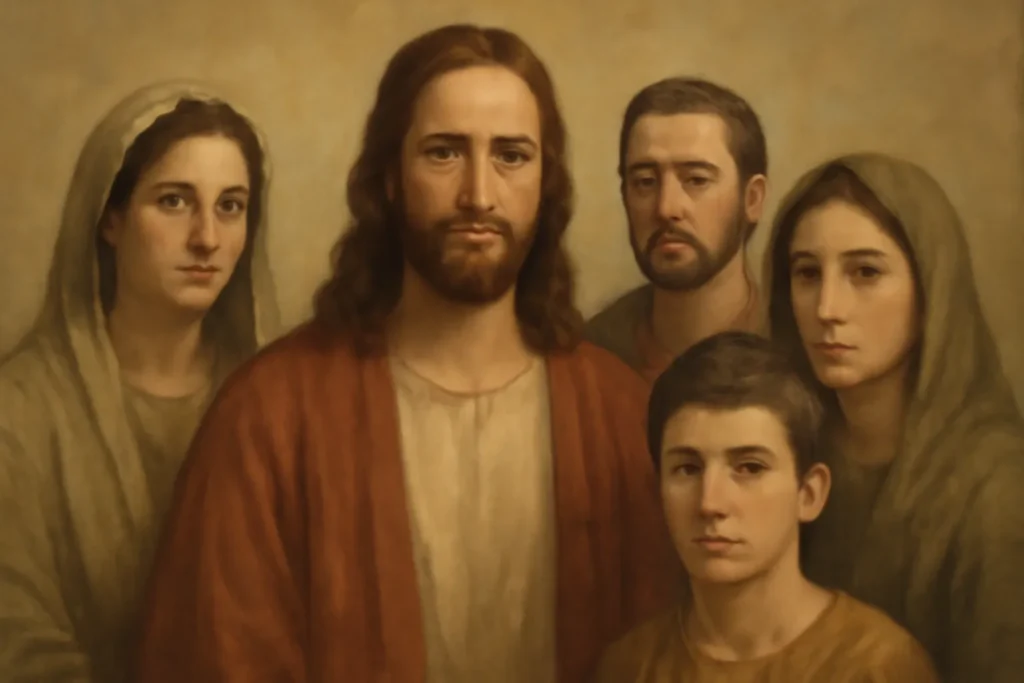
Two closely related Gospel passages are often cited in discussions about Jesus’ siblings. In Matthew 13:55–56, the author lists a set of names for Jesus’ male siblings and also notes the existence of Jesus’ sisters. The passage reads (in typical English translations): "Is not this the carpenter's son? Is not his mother called Mary, and are not his brothers James and Joseph and Simon and Judas? And are not all his sisters with us? Where then did this man acquire all these things?"
In parallel fashion, Mark 6:3 records a similar accounting: "Is not this the carpenter, the son of Mary and brother of James and Joses and Judas and Simon, and are not his sisters here with us?" The two verses highlight a pattern: Jesus has male siblings named explicitly, and a reference to sisters as well, though the sisters are not named in the text.
These verses are central for readers who ask did Jesus have brothers or brothers and sisters. They provide the clearest, most explicit evidence within the canonical Gospels that Jesus had siblings. The plural use of brothers and sisters indicates more than a single sister, which is why many translations render the passage as including both brothers and sisters.
Other Gospel and New Testament confirmations
Beyond Matthew and Mark, other New Testament books modulate the question in a way that has influenced interpretation. John 2:12 describes Jesus returning to Capernaum with his mother and brothers after a public event, which in some readings suggests a familial group including Mary and Jesus’ siblings.
In John 7:3–5, Jesus’ brothers are spoken of in a slightly different light: "They would not believe in him," with his brothers urging him to demonstrate signs publicly. This passage is often cited in discussions about whether Jesus’ brothers remained close to him during his ministry or whether they became believers later on. John’s Gospel thus contributes to the broader portrait of Jesus’ family dynamics without providing the same explicit list of siblings found in Matthew and Mark.
In addition to the Gospel accounts, the Acts of the Apostles and several of Paul’s letters reference Jesus’ brothers in ways that have become part of the broader conversation. For example, Acts 1:14 notes the company of Jesus’ brothers gathered with the apostles in prayer after the Resurrection. Paul’s letters also speak about “the brothers of the Lord,” which has led many readers to infer that Jesus had brothers who were recognized within the early Christian movement.
In the famous Pauline line from 1 Corinthians 9:5, Paul mentions “the brothers of the Lord” alongside other leaders, which is taken by many scholars as evidence that Jesus did indeed have brothers who were recognized within early Christian communities. The precise meaning of “brothers of the Lord” is debated, but the lexical and textual evidence across these diverse sources supports the view that Jesus had male siblings and that some of them played a role in early Christianity.
Understanding the Greek terms: what does adelphos really mean?
A central part of the conversation about Did Jesus have brothers? hinges on the Greek word used in the original texts. The most common term is adelphos, which is typically translated as “brother.” However, like many terms in ancient languages, adelphos can carry a broader range of meanings depending on context. In some cases, it can denote:
Biological brothers, i.e., male siblings sharing a parent or parents with Jesus.
Half-brothers or step-brothers, if Mary had other children after Jesus’ birth or if Jesus and his siblings shared a different paternal line.
More broadly, close kinship or even spiritual kinship within a family-like group (e.g., cousins or close associates) in certain contexts.
A rhetorical or symbolic sense of “brother” among members of a group (e.g., “brethren in Christ”).
In the Gospel texts where Jesus’ siblings are named—James, Joses (also rendered as Joseph), Judas, and Simon—the plural adelphoi is understood as more than one brother, and the parallel phrase about “his sisters” in Matthew and Mark implies that there were female siblings as well. The challenge for readers is to weigh the exact semantics of adelphoi in a first-century Galilean family and to decide how to translate or interpret the term in modern languages. This linguistic nuance fuels a wide spectrum of interpretations across traditions.
Historical and theological contexts: how early Christian communities read Jesus’ family
Historically, the question of Jesus’ siblings became a matter of tradition as much as of textual interpretation. The early church Fathers, the development of creeds, and theological debates over Mary’s perpetual virginity all influenced how Jesus’ family was understood and taught in various communities. Reading the biblical text in its own historical context helps readers distinguish between:
The natural, biological possibility of Jesus’ siblings (as indicated in the Gospel records).
Late antique doctrinal positions about Mary’s virginity and Jesus’ familial relationships (e.g., the doctrine of Mary’s perpetual virginity in some traditions).
The cultural practices of kinship in first-century Israel and the broader Greco-Roman world, where kinship terms and expectations shaped how families were described and remembered.
In the earliest centuries, many church writers and theologians accepted that Jesus had brothers and sisters. This is evidenced by the frequent use of the phrase the brothers of the Lord (adelphoi tou kuriou) in early Christian writings and the general practice of referring to Mary and Jesus’ siblings in a familial frame that was familiar to first-century readers. But the interpretation diverged later as different Christian communities formed distinct doctrines about Mary, Jesus, and family life.
Two major interpretive paths in modern Christian thought
When readers ask Did Jesus have siblings?, two major interpretive paths often emerge. Each path has its own assumptions and implications for how to read the biblical text and how to understand Mary and Jesus’ family life in the early church.
This reading takes the Gospel phrases at face value: Jesus had brothers named James, Joses, Simon, and Judas, and had at least one set of sisters. It also recognizes that various New Testament writers refer to the brothers of the Lord in ways that imply biological relationships. Proponents argue that the Greek term adelphoi primarily indicates sibling relationships, not merely spiritual kinship or honorary titles. In this view, the family of Jesus played a recognizable role in the life of the early church, and Jesus’ siblings had their own roles within early Christianity (e.g., James, who becomes a leader in the Jerusalem church). This path interacts with historical data about how Jesus’ family is portrayed in early Christian history and with the way early believers understood Jesus as a real person who grew up in a real family.
Path B: Mary’s perpetual virginity and non-biological siblings
In several Christian traditions—most prominently in Roman Catholic theology—Mary’s perpetual virginity is a central tenet. From this perspective, the references to Jesus’ brothers and sisters are explained as referring to:
Cousins or close relatives who lived in the same household or were described in a culturally broad sense of kinship.
Step-siblings or children from Joseph’s previous marriage (in some speculative readings), though this is not supported by all traditions.
Alternative readings of the text that preserve Mary’s virginity while still acknowledging that the Gospel authors used terms like adelphoi in ways that could include extended kin or younger relatives.
Proponents of this path emphasize the theological significance of Mary’s role and the traditional practice of maintaining Mary’s perpetual virginity in certain Christian communities. Critics of this approach argue that the biblical data, taken in its plain sense, do describe biological siblings and that later doctrinal developments should not override the plain reading of the New Testament text.
Historical and textual considerations: reliability, translation, and interpretation nuances
Several factors influence how readers interpret the phrase Did Jesus have brothers? beyond the surface reading of the Greek text:
Textual variations across manuscripts, though for the Matthew and Mark lists the lines are generally consistent in critical editions, there are places where manuscript traditions differ in minor ways. The core claim of siblings is widely preserved in early manuscripts.
Translation choices in English and other languages can shape perception. Some translations emphasize “brothers and sisters,” while others render as “brothers and sisters” with implied kinship beyond the immediate nuclear family.
Cultural context that honors extended family networks in Biblical times, where “brother” could refer to a broader kin group, not solely a biological sibling, has a bearing on how one reads adelphos in Matthew 13:55–56 and Mark 6:3.
New Testament usage of adelphos in other contexts within the same corpus and in Paul’s letters can illuminate how the early church used the term in ways that may extend beyond simple nuclear family definitions.
Practical implications of the question for faith and doctrine
While the issue may seem abstract, it has practical implications for how believers view the family of Jesus, Mary’s role, and the early church’s understanding of leadership, kinship, and authority. Here are a few areas where the question matters today:
The authority structure in the early church: If Jesus had biological brothers who played leadership roles (as James appears to have done), this can shape our understanding of how early Christian communities recognized leadership and succession after Jesus’ Resurrection.
Marian doctrine: Views on Mary, her perpetual virginity, and her role in salvation history often inform how “brothers and sisters” are interpreted within a given tradition. Some traditions stress Mary’s unique perpetual virginity, which influences how they read the Gospel family references.
Ecumenical dialogue: Different Christian groups (Catholic, Orthodox, Protestant, and independent churches) approach the text from diverse angles. A careful, respectful reading can promote better ecumenical conversations about scripture and tradition.
Common questions and quick clarifications
To help readers who may be skimming or who want a quick reference, here are concise answers to common questions related to Did Jesus have brothers and sisters and related inquiries.
Did Jesus have brothers? Yes, the Gospels explicitly mention Jesus’ male siblings by name in Matthew 13:55–56 and Mark 6:3, naming James, Joses, Judas, and Simon, and noting that his sisters were also present but unnamed.
Who were Jesus’ brothers? The named brothers are James, Joseph (Joses), Simon, and Judas. Some translations render Joses as Joseph, and the number and identity of Jesus’ sisters are not specified by name in these passages.
Did Jesus’ sisters exist? Yes, Matthew 13:56 and Mark 6:3 refer to Jesus’ sisters in the plural, indicating at least one sister, and likely more, though they are not named in the canonical texts.
What does adelphos mean? The Greek term adelphos generally means “brother,” but it can carry broader or culturally nuanced meanings such as “kinsman” or a fellow member of a close relational group. This ambiguity has fueled different interpretive traditions.
Do all traditions agree on this? No. While most Protestant and many Eastern Orthodox readers treat these texts as indicating biological siblings, some Roman Catholic and some Eastern Orthodox writers defend the perpetual virginity view and interpret the references differently.
How to approach the topic responsibly when studying Did Jesus Have Brothers & Sisters?
For readers who want to study this topic carefully, here are some practical guidelines that can help avoid oversimplification and promote thoughtful engagement:
Consult multiple translations and examine the wording in Matthew 13:55–56, Mark 6:3, and John 2:12. Compare how different English translations render the Greek terms and how they handle the plural “sisters.”
Consider the original languages where possible. A working understanding of Greek will illuminate why the term adelphos can be flexible and how context matters.
Contextualize within early Christian literature. Look at Acts 1:14 and Paul’s references to “the brothers of the Lord” to understand how early communities referred to Jesus’ family.
Different traditions have different conclusions. Recognize that doctrinal positions like Mary’s perpetual virginity arise from specific theological commitments and historical interpretations, not only from a single verse.
Read critically and charitably. Even when you disagree with a particular interpretation, acknowledge the strengths and weaknesses of each reading, and avoid collapsing a complex issue into a single “right” answer.
Related topics worth exploring for a broader understanding
To provide a richer understanding of the broader biblical and theological landscape, consider exploring these connected topics. They help illuminate why the question Did Jesus have brothers & sisters sits at the intersection of scripture, tradition, and church history.
Mary, Mother of Jesus: The role of Mary in the Gospels, including the biblical portraits of her faith and obedience, and how different traditions understand her virginity and motherhood.
The family of Jesus in early Christianity: How the first followers described Jesus’ family, and what these descriptions reveal about social norms, kinship, and leadership in the early church.
Adelphoi tou kuriou (the brothers of the Lord) in early Christian writings
: How early Christian writers used this phrase and what it suggested about Jesus’ siblings in the post-resurrection community.
Textual criticism and interpretation: Methods scholars use to assess ancient manuscripts and how the reading of a single word can influence doctrinal conclusions.
Conclusion: why the question remains relevant
The question Did Jesus have brothers & sisters invites readers to engage with the biblical record in a careful, historically informed way. The canonical Gospels do provide explicit references to Jesus’ brothers and to his sisters, which many readers interpret as evidence of biological siblings. At the same time, a rich tradition of interpretation—both in Christian history and in modern scholarship—persists in examining how adelphos functions in ancient texts, how early Christians understood kinship, and how doctrinal developments over time influenced readings of Mary and Jesus’ family. Whether one leans toward a literal reading of Jesus’ siblings or a more nuanced approach that considers historical, cultural, and theological contexts, this topic remains a vibrant part of biblical studies. It illustrates how a single phrase in the New Testament can lead to a broad conversation about family, faith, and the way communities remember the life of Jesus.
For readers who want to continue exploring, this article invites you to examine the primary passages (Matthew 13:55–56; Mark 6:3; John 2:12; Acts 1:14; Galatians 1:19; 1 Corinthians 9:5) alongside commentaries from various traditions. The goal is not merely to settle a debate but to understand how different voices have read and re-read the same texts across two millennia of Christian faith. In that sense, the question Did Jesus have brothers & sisters becomes a doorway into the broader, enduring conversation about how Christians interpret scripture, tradition, and the human story behind the gospel.
















Leave a Reply