Christian Mother's Day: Meaning, Ideas, and Prayers
Christian Mother's Day: Meaning, Ideas, and Prayers
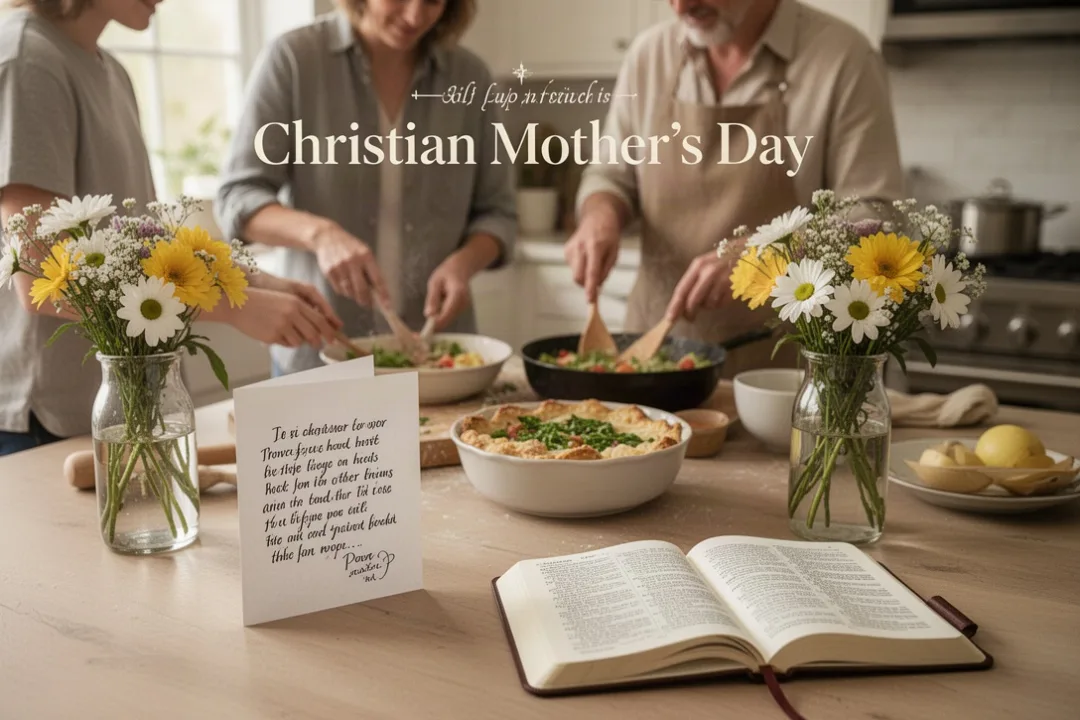
What can you do for Christian Mother’s Day when you want more than flowers and a greeting card? A meaningful celebration can honor a mother’s everyday care while pointing to God’s love, gratitude, service, and the value of family in every form.
Christian Mother’s Day does not require an elaborate program or expensive gift. You might share a prayer at breakfast, write a specific note of thanks, invite a mother who feels alone to lunch, or give a practical hand with work that usually falls to her. The most thoughtful plans combine personal appreciation with faith-centered encouragement.
Mother’s Day is a cultural holiday, not a biblical feast day. Churches and families may observe it in different ways, but the Christian purpose is often to recognize the care, sacrifice, wisdom, and faith that mothers and mother figures offer.
Scripture presents motherhood with both tenderness and realism. A mother’s influence can include teaching, protecting, correcting, praying, providing, listening, and showing patience through ordinary routines. Proverbs 31 describes a capable woman whose work benefits her household and community, while 2 Timothy 1:5 highlights the sincere faith passed through a grandmother and mother to Timothy.
These passages do not suggest that a woman’s worth depends on being married or having children. They show how faithful love shapes people. A Christian Mother’s Day celebration can therefore honor biological mothers, adoptive mothers, foster mothers, stepmothers, grandmothers, spiritual mothers, guardians, and women who have offered steady care to others.
A gracious focus: Honor mothers without treating motherhood as a measure of spiritual maturity, womanhood, or personal worth. Every person deserves care on a day that may bring both gratitude and grief.
How the Bible describes a mother’s influence
The Bible does not present one single picture of motherhood. Instead, it gives several images that can help families express appreciation with greater depth. A mother may be a teacher of faith, a source of comfort, a protector, a provider, or a person whose example continues to guide children long after they leave home.
Teaching faith through everyday life
Deuteronomy 6:6-7 connects faith with ordinary conversations and routines. The passage describes teaching God’s commands at home, during the day, and along the way. That principle can apply to a mother who prays with her children, answers difficult questions, models forgiveness, or makes room for spiritual conversations during normal family life.
Proverbs 1:8-9 also places a mother’s instruction alongside a father’s teaching. A note for Mother’s Day might recognize not only what a mother has done, but what she has taught: how to treat people with dignity, tell the truth, keep a promise, serve quietly, or seek God when life feels uncertain.
Offering comfort and protection
Isaiah 66:13 uses a mother’s comfort as an image for God’s tender care. The comparison does not make mothers divine; it recognizes that attentive, protective love can help a child understand something about comfort and security.
Many mothers provide this care in ways that are easy to overlook. They notice a change in mood, keep track of medical needs, make a home feel welcoming, or stand beside a family member during a crisis. Christian Mother’s Day is a good time to name these quiet forms of labor rather than praising only visible achievements.
Showing strength with compassion
The woman described in Proverbs 31 is active, discerning, generous, and industrious. She manages responsibilities, makes decisions, works with skill, and cares about people in need. The passage ends by directing praise toward reverence for God rather than appearance or status.
That balance matters. A Christian celebration should not pressure mothers to perform strength constantly. It can honor both courage and vulnerability, recognizing that asking for help, resting, grieving, and receiving care are not failures of faith.
The most meaningful gesture usually includes a specific memory or observation. Instead of writing only “Thank you for everything,” mention the time she sat with you during a hard season, taught you a practical skill, welcomed a friend, or prayed for you when you had no words.
A personal message can connect appreciation with faith without sounding formal. You might say, “Your patience helped me understand what faithful love looks like,” or, “I have seen your trust in God during difficult years, and your example still encourages me.” Keep the focus on her actual character rather than using general religious phrases.
Consider combining words with an action that gives her genuine relief or joy:
Prepare her favorite meal and handle the cleanup afterward.
Arrange a quiet afternoon while someone else manages household responsibilities.
Record family members sharing one memory, prayer, or quality they admire.
Give a framed photograph, journal, devotional resource, or meaningful piece of artwork.
Donate to a ministry or local charity she supports in her honor.
Plan time for conversation instead of filling the day with a crowded schedule.
If your mother is far away, a thoughtful video call can be more personal than a quick text. Ask questions about her memories, faith, hopes, and experiences. You may learn stories about her childhood or family history that have never been written down.
Christian Mother’s Day gift ideas for different personalities
A religious gift is not automatically a meaningful Christian gift. Choose something that reflects the recipient’s interests, circumstances, and relationship with faith. A mother who enjoys reading may appreciate a carefully selected book, while another may value a service that removes a burden from her week.
For a mother who enjoys prayer: give a quality journal, a simple prayer card set, or a handwritten list of specific ways you are praying for her.
For a mother who loves family history: create a small album with captions, recipes, letters, or stories from relatives.
For a busy mother: offer childcare, meal preparation, yard work, transportation, or several hours of uninterrupted rest.
For a creative mother: choose art supplies, music, flowers for her garden, or time for a class she has wanted to take.
For a mother experiencing grief: acknowledge the person or hope she misses rather than insisting that the day be cheerful.
For a mother who prefers privacy: send a quiet note or arrange a simple one-on-one visit instead of making her the center of a public event.
Be cautious with gifts that create extra work. A plant may need care, a large gathering may require hosting, and a craft project may leave cleanup behind. The best present often communicates, “You are known, valued, and cared for,” rather than, “Here is another responsibility.”
Christian Mother’s Day prayers you can adapt
A prayer does not need complicated language to be sincere. Mention the mother’s name, thank God for specific qualities, ask for strength where she is tired, and pray for wisdom and peace in the season she is living. If you pray in a group, keep the wording inclusive and avoid revealing private information.
A prayer of gratitude for a mother
God of mercy, thank you for the mother we are honoring today. Thank you for the patience, work, wisdom, and affection she has offered to others. Give her strength for responsibilities that remain unseen, rest when she is weary, and the assurance that her love has made a difference. Help us respond to her care with attention, respect, and practical support. Amen.
A prayer for a mother facing difficulty
Compassionate God, be near to this mother in the demands and uncertainties she carries. Give her wise support, trustworthy friends, and moments of genuine rest. Provide what she needs for today, and help those around her notice how they can serve rather than waiting to be asked. Bring comfort, courage, and hope without minimizing the difficulty she faces. Amen.
A prayer for mothers who are grieving
God who sees every sorrow, hold close those who are grieving a child, a mother, a pregnancy, a dream, or a relationship. Give them room to remember and feel what is true. Surround them with people who listen without offering easy explanations. Bring gentle comfort and compassionate care, especially on a day when other families may be celebrating publicly. Amen.
A prayer for spiritual mothers
Faithful God, thank you for the women who guide, encourage, teach, and protect others through their presence and example. Bless mentors, grandmothers, foster parents, ministry leaders, neighbors, and friends who offer mothering care. Help us recognize their influence and support them with the same generosity they have shown to others. Amen.
Prayer can be brief and personal: thank God for one specific quality, ask for one needed gift, and name one way you will offer support.
How churches can observe Christian Mother’s Day sensitively
A church service can recognize mothers without making the day feel like a competition. Public applause, age-based gifts, or statements that present motherhood as every woman’s highest calling may unintentionally exclude people. A thoughtful service makes room for gratitude while acknowledging the variety of family experiences in the congregation.
Church leaders might include a prayer for mothers and mother figures, a short reflection on faithful care, and an opportunity for the congregation to support families in practical ways. Rather than asking all mothers to stand, leaders can invite people to give thanks silently or pray for someone who has cared for them.
Helpful church plans include:
Providing a quiet prayer area for anyone who finds the day emotionally difficult.
Offering a meal, childcare, or household support to single parents and caregivers.
Recognizing foster and adoptive families without requiring them to explain personal circumstances.
Collecting donations for a pregnancy resource center, food pantry, shelter, or family support ministry after checking the organization’s actual needs.
Inviting several generations to share brief stories about women who shaped their faith.
Giving every attendee a small encouragement card rather than only presenting gifts to mothers.
Children’s ministry leaders can help children make cards or acts of service for a trusted woman in their lives. That wording includes grandmothers, aunts, teachers, foster parents, mentors, and other caregivers. It also avoids placing a child in a painful position if contact with a biological mother is complicated or unsafe.
For church leaders: Ask before using personal stories, photographs, or public tributes. A celebration becomes more caring when people are free to participate without disclosing infertility, loss, estrangement, adoption details, or family pain.
Common Christian Mother’s Day mistakes to avoid
Good intentions can still create pressure. Before finalizing a family or church plan, consider whether the activity honors mothers as whole people or reduces them to a role. These common mistakes are easy to prevent:
Assuming everyone has a happy relationship with a mother: Use language that welcomes gratitude, grief, distance, and complicated family histories.
Equating motherhood with holiness: Praise faithfulness, love, wisdom, and service without implying that mothers are spiritually superior to people without children.
Giving a mother more work: If she is hosting the meal, decorating, arranging transportation, and cleaning up, the celebration may not feel like a gift.
Pressuring people to become parents: Do not ask when someone plans to have children or suggest that parenting is God’s required path for every adult.
Using easy answers for grief: Avoid telling someone to be grateful, cheerful, or certain that everything happens for a reason.
Overlooking nontraditional caregivers: Include women who have offered mothering care through friendship, ministry, teaching, adoption, foster care, or extended family.
Making public recognition mandatory: People should be able to decline standing, speaking, photographs, or gifts without embarrassment.
These safeguards do not weaken the celebration. They make it more faithful to Christian compassion, which pays attention to the person in front of you rather than forcing every life into one pattern.
How to celebrate when your mother has died or is absent
Mother’s Day can bring a sharp sense of absence. You may miss a mother who has died, feel pain because of estrangement, or carry memories of neglect and abuse. You do not have to celebrate in a traditional way, and you do not owe anyone a cheerful explanation.
You might mark the day privately by lighting a candle, visiting a meaningful place, writing a letter that you do not send, cooking a family recipe, or talking with someone you trust. If memories are painful, choose an activity that supports your present well-being rather than one that keeps you focused on the past.
For a person grieving, avoid treating silence as a problem to solve. A simple message such as “I know today may be difficult, and I am thinking of you” can be more caring than a long explanation. Offer a practical choice: a walk, a meal, a phone call, or space.
How to celebrate mothers without children
Some women long for children but cannot have them. Others have chosen not to become parents, have experienced pregnancy loss, or devote their care to relatives, students, friends, patients, or neighbors. A Christian community should not assume that a woman’s life is incomplete because she is not a mother.
Honor her actual contributions instead of assigning a title she may not claim. Thank a mentor for the way she encourages younger people, recognize a teacher’s patience, or appreciate a friend who has shown dependable care. A direct, personal compliment is more respectful than a broad statement about all women having maternal instincts.
If you are the person feeling left out, decide what would serve you best this year. You might attend worship, skip a service that feels painful, spend time with chosen family, volunteer, or ask a trusted person to stay in contact. Protecting your emotional health is a valid part of observing the day.
You can create a meaningful day with a modest plan that includes appreciation, rest, prayer, and service. The goal is not to fill every hour. It is to make the mother or mother figure feel seen while sharing responsibilities fairly.
Ask what she wants. Some mothers want a family meal, while others want quiet, outdoor time, worship, or help completing a task.
Choose one personal expression. Write a note, share a memory, make a recording, or tell her directly what you admire.
Choose one practical act. Handle cooking, cleaning, errands, childcare, or another responsibility she normally carries.
Include a brief spiritual practice. Pray together, read a short biblical passage by reference, sing a hymn, or thank God privately.
Make room for different emotions. Do not require everyone to be festive, and do not interpret quietness as ingratitude.
Follow up afterward. A mother’s needs continue after the holiday, so keep one promise of support beyond the day itself.
A small gathering can include a favorite meal, a round of specific appreciations, and a prayer for the coming season. If children participate, invite them to identify one way the mother has helped them and one way they can help her in return.
Christian Mother’s Day messages for cards and notes
A good message is specific, honest, and suited to the relationship. Religious language should support the message rather than replace it. Mention a quality, memory, or influence that belongs to this particular person.
“Thank you for showing me how faith can look in ordinary responsibilities. I am grateful for your patience and steady care.”
“Your prayers, honesty, and kindness have shaped my life more than you may realize. I thank God for you today.”
“You have cared for our family in ways people do not always see. I hope today gives you real rest and joy.”
“Thank you for being a trusted guide and a generous presence in my life. Your example continues to encourage me.”
“I know this day may hold complicated feelings. You do not have to pretend; I am here to listen and support you.”
For a church card, use language that recognizes a broad community: “May God strengthen every woman who offers faithful care, comfort those who are grieving, and help us become more attentive to one another.” This kind of message expresses Christian hope without assuming the same story for every reader.
How Christian Mother’s Day points toward ongoing care
One day of recognition cannot compensate for a year of being overlooked. If you truly want to honor a mother, notice the recurring pressures she carries and offer support at ordinary times. Check in after a difficult appointment, bring food during a demanding week, share transportation, or make sure she has time away from caregiving.
Christian love is expressed through consistent attention, not only public celebration. A Mother’s Day prayer can become a commitment to listen more carefully, divide work more fairly, and treat caregivers as people who also need care.
That ongoing practice gives the holiday its deepest meaning. It honors mothers and mother figures while reflecting the biblical call to bear one another’s burdens, encourage the weary, welcome the vulnerable, and show gratitude through action.
Frequently asked questions
Is Mother’s Day a Christian holiday?
Mother’s Day is not a biblical feast or required Christian observance. It is a cultural holiday that many Christians use as an opportunity to express gratitude, serve caregivers, pray for families, and recognize mother figures. Churches may include it in worship, but each congregation can choose language and practices that respect different family experiences.
What Bible passage is appropriate for Christian Mother’s Day?
Several passages can support a thoughtful reflection, including Proverbs 31:10-31 on a woman’s wisdom and work, Proverbs 1:8-9 on a mother’s instruction, 2 Timothy 1:5 on faith passed through generations, and Isaiah 66:13 on maternal comfort as an image of God’s care. Read the surrounding context and explain the passage rather than using it as a stereotype.
What should I say to someone who is grieving on Mother’s Day?
Acknowledge the difficulty without trying to remove it. You could say, “I know today may be painful, and I’m thinking of you,” then offer specific support such as a call, meal, walk, or quiet company. Avoid assuming the source of grief or giving explanations about why the loss happened.
How can a church include women who are not mothers?
Use broad language that honors caregivers, mentors, grandmothers, foster parents, teachers, and spiritual mothers without suggesting every woman should have children. Make participation optional, avoid public ranking or mandatory recognition, and provide care for people experiencing infertility, loss, estrangement, or difficult family relationships.











Leave a Reply