Introduction: Why feeding the hungry is a central biblical theme
Across the biblical narrative, the call to feed the hungry appears not merely as a charitable act but as a reflection of
God's character and a tangible expression of faith in action. Compassion in feeding is linked to
justice, mercy, and the restoration of flourishing human life. When people consider the question, “What does the Bible say
about feeding the hungry?” the answers are layered: it is a command, a moral obligation, and a doorway to hope,
generosity, and community renewal. In this article, we explore biblical verses about feeding the hungry,
offer variations across translations, and discuss practical ways to translate sacred words into everyday acts of nourishment.
The central idea is simple in its sincerity: God cares for the hungry, and those who follow Him are called to imitate that care.
That imitation becomes a source of hope for the hungry, and it also becomes a testament to the power of faith
to heal, transform, and sustain communities. As you read, you’ll encounter verses that speak of feeding as mercy, a form of
worship, and a doorway to intimate, transformative relationship with God and with neighbors in need.
Foundations: what the Bible consistently says about feeding the hungry
The biblical witness links hospitality, generosity, and communal care for the hungry.
The acts of feeding those without enough food are often presented as integral to true worship and righteous living.
Core themes you will encounter
Compassion in action: belief that faith is evidenced in care for others, especially the vulnerable.
Divine provision: God’s own care for the hungry and His call for believers to provide what is needed.
Justice and mercy: addressing structural hunger as part of a just society.
Hospitality as invitation: welcoming the hungry as if welcome Christ Himself.
Below are some foundational verses, presented with brief notes to show how they frame the practice of feeding the hungry.
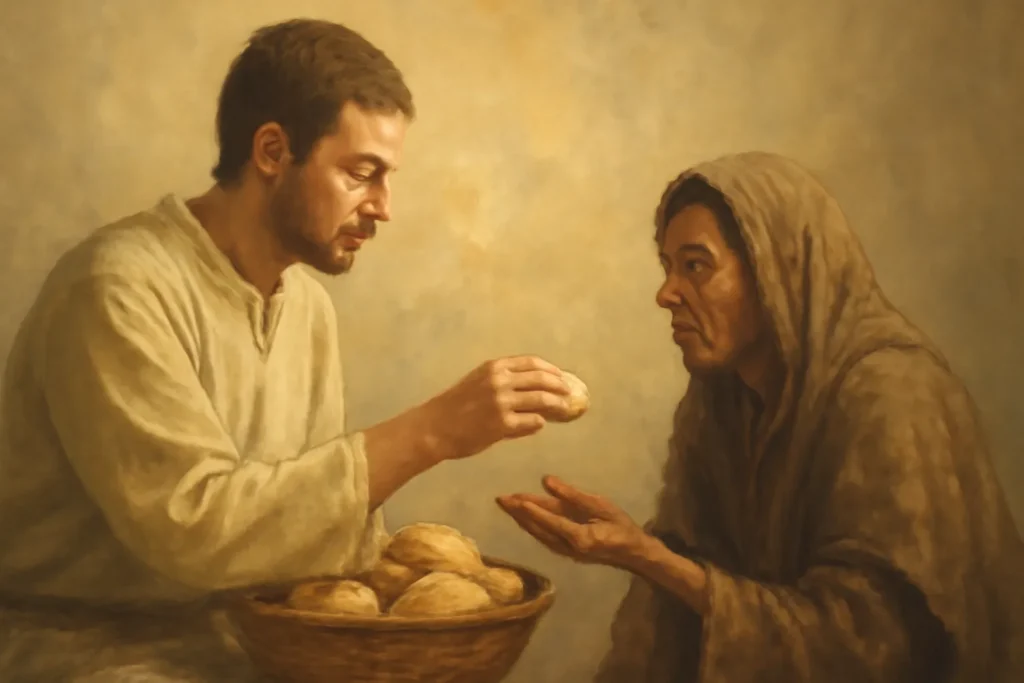
Matthew 25:35-40 – “For I was hungry, and you gave me food; I was thirsty, and you gave me drink.” This passage
frames feeding the hungry as service to the Lord Himself, a measure of righteousness that translates into eternal hope.
Matthew 14:13-21 – Jesus feeds the five thousand, demonstrating compassionate leadership and provision for physical needs.
Luke 3:11 – “Anyone who has two shirts should share with the one who has none, and anyone who has food should do the same.”
A concise instruction about sharing resources as a standard practice of a life shaped by God’s mercy.
Luke 12:33-34 – “Sell your possessions and give to the poor.” The verse invites a posture of radical generosity.
Proverbs 22:9 – “A generous person will himself be blessed, for they share their food with the poor.” This ties blessing to generosity.
Proverbs 28:27 – “Those who give to the poor will lack nothing.” A reminder of divine provision accompanying generous acts.
Isaiah 58:10-11 – If you spend your energy on feeding the hungry, God’s guidance and nourishment will sustain you.
Isaiah 58:7 – “Is it not to share your food with the hungry and to provide the poor wanderer with shelter?” The ethical call to hospitality and sustenance.
Proverbs 19:17 – “Whoever is kind to the poor lends to the Lord, and He will reward them for what they have done.”
James 2:15-17 – Faith without works is incomplete; feeding the hungry is a visible sign of living faith.
1 John 3:17 – If someone has material possessions and sees a brother or sister in need but has no pity, the love of God is not in that person.
Variations and breadth: variations of verses about feeding the hungry across translations
One of the strengths of biblical study is recognizing how different translations frame the same idea with nuanced emphasis.
While the core command remains, wording can shift the focus toward mercy, generosity, or social justice. Here are
variations that illuminate semantic breadth without changing the essential message:
Mercy-focused renderings (KJV-style clarity): The language often emphasizes deed and righteous action.
Example: “I was hungry, and you gave me meat.” The emphasis is on the concrete act of providing nourishment as an expression
of loyalty to God.
Justice-oriented renderings (NRSV/NIV-inspired): Emphasize justice, equity, and systemic compassion. Example:
“The hungry shall be fed; your acts of generosity align with God’s justice and restoration.”
Hospitality-centered renderings (ESV/CSB-inspired): Emphasize the community welcome of others as a form of divine service, “When you feed the hungry, you welcome Christ in your midst.”
Proclamation and daily living (paraphrased summaries): Short paraphrases that connect feeding the hungry to daily discipleship and daily bread.
Across translations, the idea remains: feeding the hungry is not a marginal virtue but a central practice of a living faith.
Some readers focus on the personal blessing that comes to the giver, while others highlight social justice, communal welfare, and
the restoration of dignity for those in need. In any translation, the biblical call remains a beacon of hope and
a visible sign of God’s presence in the world.
Paraphrased perspectives to broaden understanding
Paraphrase 1: God cares for all who hunger, and those who respond with practical help reflect His love to their neighbors.
Paraphrase 2: Sharing food is a form of worship that binds believers to the vulnerable, turning faith into action.
Paraphrase 3: Generosity nourishes both body and soul; the act of giving sustenance is a doorway to God’s presence.
Historical and thematic context: what feeding the hungry meant in biblical times
Understanding the social and historical background helps interpret the weight of these verses. In ancient Near Eastern and
Greco-Roman contexts, hospitality, communal meals, and shared resources were essential for survival. Food security was not
always guaranteed, and food-sharing networks often formed the backbone of social safety. When the Bible calls for feeding the hungry,
it is often speaking to communities where famine, poverty, or displacement could readily erode dignity and life.
Hospitality as covenant: Sharing food was part of covenantal fidelity and neighbor love—an expectation that bound people to God and to each other.
Feeding as a sign of renewal: In prophetic literature, justice and mercy toward the hungry signal God's restorative plan for society.
Messianic expectation: Jesus’ feeding miracles foreshadow the eschatological feast—a foretaste of the kingdom where hunger is healed.
The overarching message is not merely about meeting a short-term need; it is about reimagining community life around
care, dignity, and shared provision. When modern readers engage with these texts, they are invited to participate in a
pattern of hopeful action that honors the divine call to love one’s neighbor as oneself.
Practical applications: translating biblical teaching into everyday action
The biblical call to feed the hungry is not limited to donors or organizations; it is a pattern for individuals, families,
churches, and communities. Below are practical pathways that reflect the spirit of the verses discussed above.
Personal and family practices
Share meals: Make a habit of sharing meals with neighbors, coworkers, or students who are in need.
Keep a pantry of essentials: Maintain a small reserve of non-perishable foods to share with someone who is hungry.
Cook with intention: Prepare extra portions to give away after family meals or to those who cannot afford regular meals.
Teach children generosity: Involve children in choosing what to give and in conversations about why generosity matters.
Church and community initiatives
Food ministries: Create or support food banks, soup kitchens, or community fridges that provide steady nourishment to those in need.
Community dinners: Host regular meals that welcome the hungry and those who may feel isolated.
Collaboration with local agencies: Partner with shelters, schools, and nonprofit organizations to address root causes of hunger.
Advocacy and justice: Advocate for policies that improve food security, such as access to nutritious meals and living wages.
Hope and empowerment: what feeding the hungry does for faith communities
The act of feeding the hungry is more than a charitable deed; it generates hope that radiates through a community.
When people experience tangible care, trust is rebuilt, relationships deepen, and resilience grows. The biblical message
that God sees the hungry and that believers participate in His care invites a hopeful vision for the future—one
where everyone has the nourishment necessary to pursue purpose, dignity, and flourishing.
As you engage with these verses, consider how hope is fostered not only by meeting immediate needs but also by pressing for
a larger culture of care. Justice, mercy, and generosity intersect to create a social fabric in which the hungry are not
overlooked. The biblical call to feed the hungry thus becomes a continuing invitation to participate in the divine work of
healing and restoration.
In practical terms, this means cultivating a posture of ongoing generosity and a readiness to respond to emergent needs—whether
through regular food distribution, emergency aid, or long-term programs that address the underlying causes of hunger. When a
community consistently practices nourishment and hospitality, it becomes a living sermon—an embodiment of the hope found in God's Word.
Conclusion: letting God’s Word shape acts of nourishment and hope
The Bible’s teaching on feeding the hungry invites believers to connect doctrine with deeds, faith with
action, and worship with daily life. The verses discussed here offer a tapestry of guidance: some speak with the clarity of
command, others with the warmth of invitation, and others with the prophetic call to justice and renewal. Across the Bible,
the consistent thread is love in actionable form—care for the body as a doorway to care for the whole person.
When communities choose to respond to hunger, they are not only nourishing bodies but also kindling a living hope that points
toward God’s redemptive purposes. The hope in God’s Word is activated when verses are not isolated
on a page but carried into kitchens, pantries, and tables where real people sit with real needs. May your study of these verses
translate into acts of nourishment, moments of hospitality, and a broader commitment to justice and mercy that mirrors the heart of Christ.
















Leave a Reply